
Sharp’s First VFFS Machine Features Kollmorgen stepper motor

Sharp Packaging Systems (www.SharpPackaging.com) has announced the release of its first vertical form fill and seal (VFFS) machine that employs a Kollmorgen (www.kollmorgen.com) stepper motor.

Dubbed as the Hawk Evolution, the new machine features the industry’s smallest footprint for the bag size that it will manufacture. Designed to operate for hundreds of millions of cycles, its maintenance free stepper motor enables the packaging system to make a bag measuring up to 18-inch long and 12-inch wide.

Sharp first vertical form fill and seal machine

Its jaw drive mechanism is run by the double stack Kollmorgen stepper motor, which is used in various industries and best known for its reliability and long service life.

Since the drive mechanism for the jaws have very limited moving parts, only a small number of parts could wear out. The only part that would need routine replacement is the high speed bearings that are easy to change. All parts of the Hawk Evolution are off the shelf, which means they are available through various distributors.

The packaging system also features a motorized unwind — a DC motor turns the spindle where the roll sits. The motor helps reduce stress on the pull belts, feed the film off the roll and maintain a constant tension on the film, enabling a smoother movement of the film in the system.

Kollmorgen’s VLM servomotors offer good performance at an excellent price

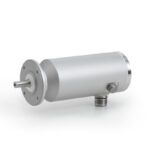
Kollmorgen (www.kollmorgen.com) has launched its Value-Line servomotors (VLM), which offer good performance at an exceptional price. With a torque of between 0.5 Nm and 16 Nm (continuous or peak), the servomotors deliver a high value, limited feature set motor that provides solid servo performance for various applications.

“VLM servomotors deliver exceptional value to machine builders who need good servomotor performance at the best possible price,” said Gene Matthews, Product Manager at Kollmorgen.

Kollmorgen VLM servomotors

“These motors deliver high-torque-per-dollar by leveraging specially selected components and flying leads that help eliminate the need for intermediate cables, and by utilizing low cost feedback options,” he added.

“VLM motors complement Kollmorgen’s high-performance and high-flexibility global AKM(TM) servomotor product line by providing a lower priced solution built around a focused set of options.”

With 12 standard windings, VLM servomotors are offered in the most famous motor sizes and come in NEMA 23 and NEMA 34 as well as Metric mounting standards. The ROHS compliant servomotors also feature multiple shaft configurations to allow for seamless integration into almost any system.

Offering a rated speed of up to 6000 rpm, the VLM servomotors delivers up to 16 Nm peak torque and around five Nm continuous torque, while operating at 160/320 VDC or 120/240 VAC. The cable and multiple feedback options provide machine builders system configuration flexibility at no added cost.

Kollmorgen’s POWERMAX II® Series Stepper Motors

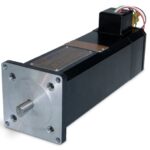
Kollmorgen’s POWERMAX II® series stepper motors, like most other Kollmorgen stepper motors, are now UL recognized. This enables OEMs who build UL-certified equipment to integrate high-performance stepper technology into existing designs without requiring re-certification. These NEMA 23 (60 mm) step motors are available in half, single and two stack configurations, and provide holding torques from 42 to 253 oz-in. Speeds up to 3000 RPM more than satisfy the velocity demands of most high torque applications.

Kollmorgen PowerMax 2

“UL recognition on high-performance step motors is a relative rarity, so machine builders who might otherwise benefit from this technology are sometimes faced with choosing between moderate performance steppers or other motor options that are less than ideal for the application. So UL recognition of Kollmorgen’s POWERMAX II step motors is significant in that it enables OEMs whose machines need to be UL-certified to improve machine operation with high-performance steppers, without having to re-submit their equipment to UL for re-certification,” explains Josh Inman, Product Manager.

Kollmorgen
www.kollmorgen.com

Kollmorgen’s Servo Drive with Auto-Tuner boasts multiple motion buses

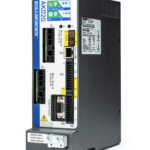
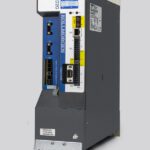
Kollmorgen’s (www.kollmorgen.com) AKD(TM) servo drive functionally provides support to the CANopen® drive, EtherCAT® drive, base analog drive and indexing drive with just a single drive SKU.

This delivers more efficient prototyping and bench testing to packaging, converting, medical, printing and other machine builders as well as enable smooth transition from a bus type to another.

“Where most servo drive hardware and firmware support just a single motion bus, a single AKD servo drive supports multiple motion buses that would otherwise require two different sets of hardware and firmware. With a simple parameter change and a power cycle, machine builders can quickly and easily change the AKD’s communication protocol between EtherCAT and CANopen giving them a clear competitive advantage in getting new and better machines to market, faster,” said Josh Inman, Product Manager at Kollmorgen for North America.

Kollmorgen’s Servo Drive

Without the need for a separate option cards, the AKD servo can also support various Ethernet motion buses from the base hardware as well as feedback devices.

It currently supports feedback devices such as BiSS, Endat, Analog Sine/Cos encoders, Smart Feedback Devices (SFD), HIPERFACE®, incremental encoders, and resolvers. Aside from CANopen and EtherCAT motion buses, the AKD also supports PROFINET, Modbus/TCP, EtherNet/IP and SynqNet®.

AKD servo drives cater great operational flexibility and quality at reduced costs, increasing overall footprint associated with integrating option card, as these capabilities are available within the base product’s dimensions.

The servo drives also feature 120/240 VAC or 480 VAC operation, power ranging three to 24 Arms continuous current and at peak, nine to 48 Arms.

Kollmorgen introduces new AKM8 Servomotors

January 18, 2011 by  
Filed under Controllers, Motors, Servo Motors

Kollmorgen introduces AKM™ 8 Servomotors – the latest addition to the company’s global, field-proven AKM motor series.  With an unrivaled feature-set to satisfy global requirements right from the base hardware, AKM8 motors deliver higher torque density to cover the broadest torque/speed range in a housing that is 30% shorter than any standard motor in its class available today.  As a result machine builders can reduce the size of their machines without sacrificing performance, or they can select a longer stack length to achieve higher performance without having to specify a larger, more expensive motor that would typically require mechanical changes to the machine.

Kollmoger AK8

The AKM8 is available in two standard flange/shaft combinations designed to seamlessly integrate with 80% – 90% of machine builder needs around the globe, with no modifications to the customer flange needed.  As standard, AKM8 windings are designed to operate at 230, 400, 480 VAC, eliminating the need for voltage transformation for machines that will be deployed in various geographic regions.  AKM8 motors feature Class F insulation for a temperature rating of 155°C, and provide stall torque from 75 to 180 Nm, operating speeds up to 2500 rpm, and power up to 19.8 KW, with bearing lifetime rated to 20,000 h.  These motors are RoHS and REACH compliant, UL listed, and carry the CE mark.

All AKM series motors feature a robust one-piece housing with potted windings for maximum wire isolation and excellent heat dissipation, resulting in robust performance and long life in even the most demanding application environments.  Market-standard high resolution feedback options for high- performance/precision or rugged environments are available, including Endat, BISS, Hiperface, and resolver option, among others.  AKM motors are available for low or high speed (to 8000 rpm) applications, with windings that can be applied to all standard global voltages including 75 VDC, 120, 240, 400 and 480 VAC.  A number of options are available to satisfy wide ranging application needs including a reinforced bearing to handle higher radial force, a sealing option to achieve IP67 protection at the flange, as well as varied connectivity and mounting options.

For truly unique applications where the more than 200,000 standard AKM offerings don’t meet the requirements of a given application, the Kollmorgen engineering support team can work alongside OEMs to customize a solution to satisfy their needs.

Kollmorgen
www.kollmorgen.com


Jakob’s graphic printing machine improves productivity with Kollmorgen servo motors and precision gearboxes

Jakob Graphic Services GmbH (www.jakob-gmbh.eu) has unveiled a jumbo roll collator for advanced printing operations. The machine can automatically label, collate, glue, fold and cut forms, brochures with or without a finish, mailers with cut inserts, calendars and other similar printed objects. The machine performs with precision during highly dynamic processes while rapidly adapting to new tasks, with a very fast and simple changeover system. The machine’s center has an embedded Kollmorgen Automation Suite (KAS), which is very important to speed up development and commissioning with real-time system simulation and simplified programming interface.

Kollmorgen servo motors and precision gearboxes

The new Kollmorgen Automation Suite (KAS) has several key advances, which include a machine throughput of 200m/min, a more compact cabinet with a complete IPC module and total application development time of one week.

Compared with traditional machines, the new device eliminates the need to change the gearwheels and cylinders used for perforating or cross cutting several paper formats due to Kollmorgen’s AKM servo motors and precision gearboxes.

Customized formats can be used in the programmable control unit, while format changeover is performed at the touchscreen display.

“The crucial factor for the decision to go with the Kollmorgen Automation Suite was that the Motion Control, PLC and HMI/SCADA functionalities – in our case on an industrial PC – are available via a single processor. This standard tool allows the cost-effective introduction of company-specific knowhow and tailored solutions for individual applications,” said Jakob Graphic Services design engineering and technical manager. “Furthermore, it radically speeds up programming and commissioning, and increases machine performance.”

“Smart Home” uses motion system

Virginia Tech’s Lumenhaus is an 800-sq-ft energy-optimized “smart house” that features an active motion control system to minimize the overall HVAC load. It recently won the first place of the 2010 Solar Decathlon Europe.

lumenhaus

The control system uses servo motors and a series of belt-driven linear actuators (in a custom size) to drive 9-feet-wide panels over the bedroom spaces and 18-ft-wide panels over the main living room. The house also features a Siemens APOGEE building control system, which controls ten stops in the system. The APOGEE control system is programmed to send a signal to automatically close the panels if, for instance, the wind gusts reach 30 mph, in order to protect the house.

“The thought behind the Lumenhaus design was to build a sustainable smart house with the ability to maintain optimal energy performance at all times. So when the weather is good the house automatically opens up and doesn’t use energy,” said Professor Joseph Wheeler, Virginia Tech’s project coordinator. “Conversely, when the weather turns bad a system is in place that enables the house to protect itself.”

The Lumenhaus features a “whole building design” construction approach, wherein all of the systems and components of the house have been built and designed to work together in order to maximize the owner’s comfort with environmental protection. The house has an integrated environmental control system that is powered by motion control products from Thomson (www.thomsonlinear.com) and Kollmorgen (www.kollmorgen.com).

“To create a more energy-efficient house, the idea was to protect the glass in the house when the weather becomes extreme,” said Wheeler. “But we didn’t want to lose beautiful, natural light in the house. We started by designing polycarbonate panels filled with aero gel insulation, but the initial challenge was how to drive the panels back and forth over the facade of the house.”

Kollmorgen introduces KBM™ Series Frameless Brushless Motors for tightly integrated motion applications

May 25, 2010 by  
Filed under Motors

Kollmorgen (www.kollmorgen.com) unveiled a new family of frameless motors developed from the extensive and proven portfolio of Kollmorgen designs, the new KBM™ Series Frameless Brushless Motors. The new series is available in 14 sizes for high- or low-voltage operations. The series delivers the speed, torque and power within a compact footprint and cost-effective package that provides system designer flexibility in specifying a motor, which fits the dimensional requirements and specific performance of the application.

KBM Series Frameless Brushless Motors

“Kollmorgen engineers are adept at leveraging existing design successes to develop new motors with superior value, enabling our customers to gain a competitive advantage through faster time to market and minimized investment. KBM motors were born of those efforts,” said Kollmorgen, North America Product Manager Bryan Bird. “OEMs tasked with designing a highly optimized and tightly integrated machine or device will find KBM motors to be an excellent choice due to their unique design which inherently improves mechanical compliance, reduces parts count, and improves performance through the use of powerful direct-coupled electro-magnetics with a light weight and compact form factor.”

The new KBM frameless brushless motors have standard frame sizes between 60mm and 825mm in diameter, and for 480 VAC or 240 VAC operations. The series has additional motor windings to allow optimized performance at lower voltages (“12 or 24 V DC”). Each frame size is available with three or four stack lengths. They feature encapsulated stator windings for environmental and thermal performance. Its internal windings are well rated for continuous duty operation up to 311°F (“155°C”), enabling reliable performance even under extreme temperature and duty conditions. The rare-earth neodymium Iron Boron magnets give continuous torque ranging from 1.07 lb-ft (1.45 N-m) up to 2540 lb-ft (3445 N-m), and peak torque ranging from 3.62 lb-ft (4.91 N-m) up to 9450 lb-ft (12,812 N-m), for maximum power ranging from 1.22 HP (550 W) up to 24.8 HP (18.5 KW) within the smallest motor package.

For a fully optimized motion solution, combine these new KBM™ series frameless brushless motors with AKD™ Servo Drives from Kollmorgen.

Motion System Drives Realistic Racing Experience

After many years of evaluating and working with motion systems for various clients, UK-based Ball Racing Developments Ltd (BRD) concluded that nothing on the market could accurately simulate a racing car’s motion. So, the management and the engineers developed a new type of system dedicated to the motions experienced in a racing car, particularly the high velocity forces of a Formula One car for use in racing driver training, entertainment, and private owners with a keen interest in motorsport.

danaher motion race car

Kollmorgen AKM-7 and AKM-6 brushless AC servomotors and Thomson linear systems deliver such a realistic racing experience that the jolt effect from crashing into barriers had to be softened in the interests of health and safety.

The first of this new generation of dedicated driving motion systems was released in November 2007 and sent to a theme park in Macau that wanted accurate motorsport simulators. However, BRD was unhappy with the performance of the equipment offered by its existing supplier of motion control products. The simulation technology specialist wanted a more compact and higher performing motor system, a specification that was ultimately fulfilled by Wood Dale, Ill. based Kollmorgen AKM-7 and AKM-6 brushless AC servomotors and Thomson linear systems.

The motors offer 0.16 to 53 Nm torque and speeds up to 8,000 rpm in a compact frame-size. This is an important factor to BRD, where any weight savings can benefit system performance and reaction times. The AKM motors were about half the size of the conventional servomotors they replaced.

One motor is required for each degree of freedom on the V1-500 motion platform. One AKM-7 motor handles movement in the surge direction (forward and backward acceleration and deceleration). AKM-6 variants handle motion in the side slip (side-to-side lateral thrust) and yaw (angular motion in the horizontal plane) directions. Yaw is achieved by changing the centre of rotation between the front and rear wheel positions. Each motor is powered by a Kollmorgen S600 AC servo drive, a digital servo amplifier.

For two motion platforms bound for Singapore, the engineers decided to include Thomson ball screw and linear guide systems in the same package in order to reduce lead-time and simplify the build process. These platforms were completed in just 10 weeks from signing the order, including design, build, and installation.

Three 40 mm x 40 mm ball screw assemblies move the Formula One car mounted on the motion platform. All are the same length for commonality purposes and each offers 1.2 m of travel. These assemblies consist of a precision rolled screw shaft and a nut (the outer race) with an internal groove and circuits of precision steel balls that re-circulate in the grooves between the screw and nut. This backlash-free anti-friction design converts torque to thrust as either the screw or nut turns and the other component moves in a linear direction. These ball screws have a high lead, which is necessary to generate the required 1 m/sec acceleration.

Alongside the ball screws and supporting the loads and high acceleration forces is a pair of 500 Series Profile Rail linear guide systems. These configurable linear guides meet DIN standard 645-1 requirements. Their rigidity and load capacity withstands the acceleration forces experienced in this realistic F-1 simulation. BRD had the option to plate linear guide bearing systems with thin-dense chrome (TDC) to withstand the exceptionally humid atmosphere in Singapore.

When mechanically complete, the two motion control platforms were linked with visual and sound technology created by BRD by mapping and modeling the Singapore street circuit. Based on BRD’s netKar Pro software platform, anyone can download a free copy of the Singapore night race circuit from www.singtelrace.com and practice driving the difficult track that twists and turns it way around many of Singapore’s famous landmarks. Users can even post lap times to the on-line leader board to see how they compare with others.

The two racing simulators deliver a realistic racing experience, short of being in an actual race car. At one point, crashing into the barriers produced such a sudden jolt that the effect had to be softened by BRD in the interests of health and safety. Approximately 1.0 to 1.5 G force can be generated in each axis of motion by the platform. As an added safety measure all drivers have to wear a four-point racing harness.

There has been plenty of interest from racing teams; a leading Formula One driver tested the V1-500 and managed to reduce his lap time by 0.7 sec. He noted that the system provided him with a greater ‘feel’ for effects present in a real racing environment such as under-steer, over-steer, weight transfer braking and wheel-spin, and helped improve his reactions.

Thomson
www.thomsonlinear.com

Kollmorgen, a Danaher Motion Co.

www.danahermotion.com/kollmorgen