
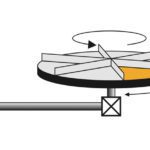
In motion control, there are typically two types of positioning that can be used for a linear or rotary axis: relative, in which each position is based on a previous position, regardless of the actual position of the axis; or absolute, in which each position is referenced to a home, or zero, point. Axes that […]
Rotary Encoders
Bearing-free SIKO encoder: Redundant non-contact angle and distance measurement for mobile machines
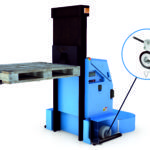
In the field of mobile commercial vehicles, safety requirements are increasing, especially within the EU. This presents not only suppliers, but also manufacturers of vehicles, with new challenges. To make it as easy as possible for manufacturers to adapt to new requirements, the Buchenbach based firm SIKO GmbH has developed the MSK320R bearing-free rotary encoder. […]
FAQ: How do digital encoders simplify setup and zeroing?
In a recent Design World video, my esteemed colleague Miles Budimir and I got to assemble and zero an AMT31 commutation encoder from CUI Inc. As we’ve covered in other editorial, capacitive technology can outperform optical technology. Used for years in digital calipers and to measure rotational movement, capacitive technology in encoders replaces optical disks with a printed circuit-board rotor […]
What is TTL output for incremental encoders?
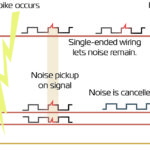
Updated August 2018 || Rotary encoders are used to track the angular position of a shaft, providing either incremental or absolute position information. Incremental rotary encoders work by generating pulses as the shaft rotates. By counting the number of pulses, the position of the shaft relative to its starting position can be determined. Rotary encoders […]
Hengstler adds to its series of ATEX-rated absolute rotary encoders
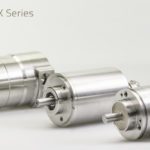
Hengstler’s new ACURO AX73 optical encoders offer attributes such as ease of installation, high precision and compact dimensions. The AX73 completes the company’s comprehensive family of ATEX-rated absolute rotary encoders, both optical and magnetic. The new AX73 and AX65 offer a special mounting system, while also available are the AX70 and AX71 absolute encoders, as […]
Sealed rotary encoders for high loads offered globally by HEIDENHAIN
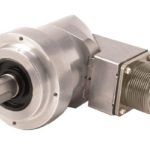
HEIDENHAIN has expanded its range of incremental sealed rotary encoders for high loads with the new ROD 620 and 630 models of the ROD 600 series. The sturdy design of these encoders’ mechanics opens up broad fields of application in machine tool, plant construction, and in position feedback systems for controlling asynchronous motors. The ROD […]
New rotary magnetic encoders from Novotechnik feature 16-bit resolution
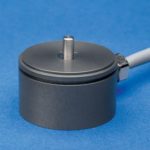
The new Vert-X 51 Series of rotary magnetic encoders from Novotechnik U.S. features up to 16-bit resolution and repeatability to 0.1°, depending on the model. The measurement range of the Vert-X 51 Series is 0 to 360° and physical measurements of the housing are 30 x 50 mm. These encoders are ideal for harsh environments […]
FAQ: How do I pick between rotary and linear encoders?
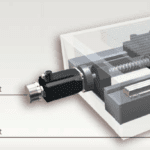
Edited by Zak Khan || It may seem as though linear encoders and rotary encoders have strictly defined (and maybe even mutually exclusive) applications. Prevailing logic is that linear encoders track linear motion and rotary encoders track rotating shafts — but this isn’t always the case. Some motion designs can use linear or rotary encoders, […]
How to program smart encoders and their diagnostics
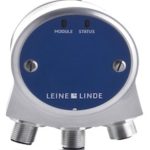
Edited by Zak Khan || Smart encoders are encoders that contain hardware and associated software that let them dynamically change settings such as resolution and output circuit type. So one model of smart encoder can often replace many different models of traditional encoders. Read the related encoder FAQ: Why do some encoders have embedded microprocessors for signal […]
New rotary encoders for safety-critical systems from POSITAL
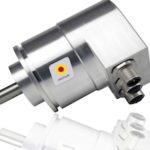
POSITAL has expanded its family of IXARC absolute rotary encoders to include models explicitly designed for use in safety-critical motion control systems. The new encoders feature redundant measurement elements and are certified to Safety Integrity Level 2 (SIL 2) and Performance Level d (PL d). They feature a PROFINET communications interface and support the PROFIsafe […]