
• Skip to primary navigation
  • Skip to main content
  • Skip to primary sidebar
  • Skip to footer
  • Advertise
  • Subscribe

Motion Control Tips

Automation • Motion Control • Power Transmission

  • News
    • Industry News
    • Editor Blogs
  • Controls
    • HMIs
    • PC-Based Controllers
    • PLCs + PACs
    • Stand-Alone Controllers
    • Software
  • Drives
    • Servo Drives
    • Stepper Drives
  • Encoders
    • Absolute Encoders
    • Incremental Encoders
    • Rotary Encoders
  • Mechanical
    • Bearings
    • Brakes + Clutches
    • Belt + chain
    • Couplings
    • Gears + Gearing
    • Lubrication
    • Shock + Vibration Mitigation
    • Springs + Rings + Seals
  • Linear
    • Actuators
    • Linear Motors
    • Linear Encoders
  • Motors
    • AC Motors
    • DC Motors
    • Brushless Motors
    • Gearmotors
    • Piezo Motors
    • Servo Motors
    • Stepper Motors
  • Systems
    • Conveyors + linear transport systems
    • Gantries + Stages
    • Rotary Tables
    • Grippers + End Effectors
    • Robotics
  • Networks
    • Connections + Sliprings
    • Fieldbuses
    • I/O
    • Sensors + Vision
  • Resources
    • FAQs
      • Motion Casebook
      • Motion Selection Guides
    • Suppliers
    • Video
You are here: Home / Motors / DC Motors / FAQ: How do engineers typically integrate stepper drives?

FAQ: How do engineers typically integrate stepper drives?

June 30, 2015 By Zak Khan Leave a Comment

Stepper Drive
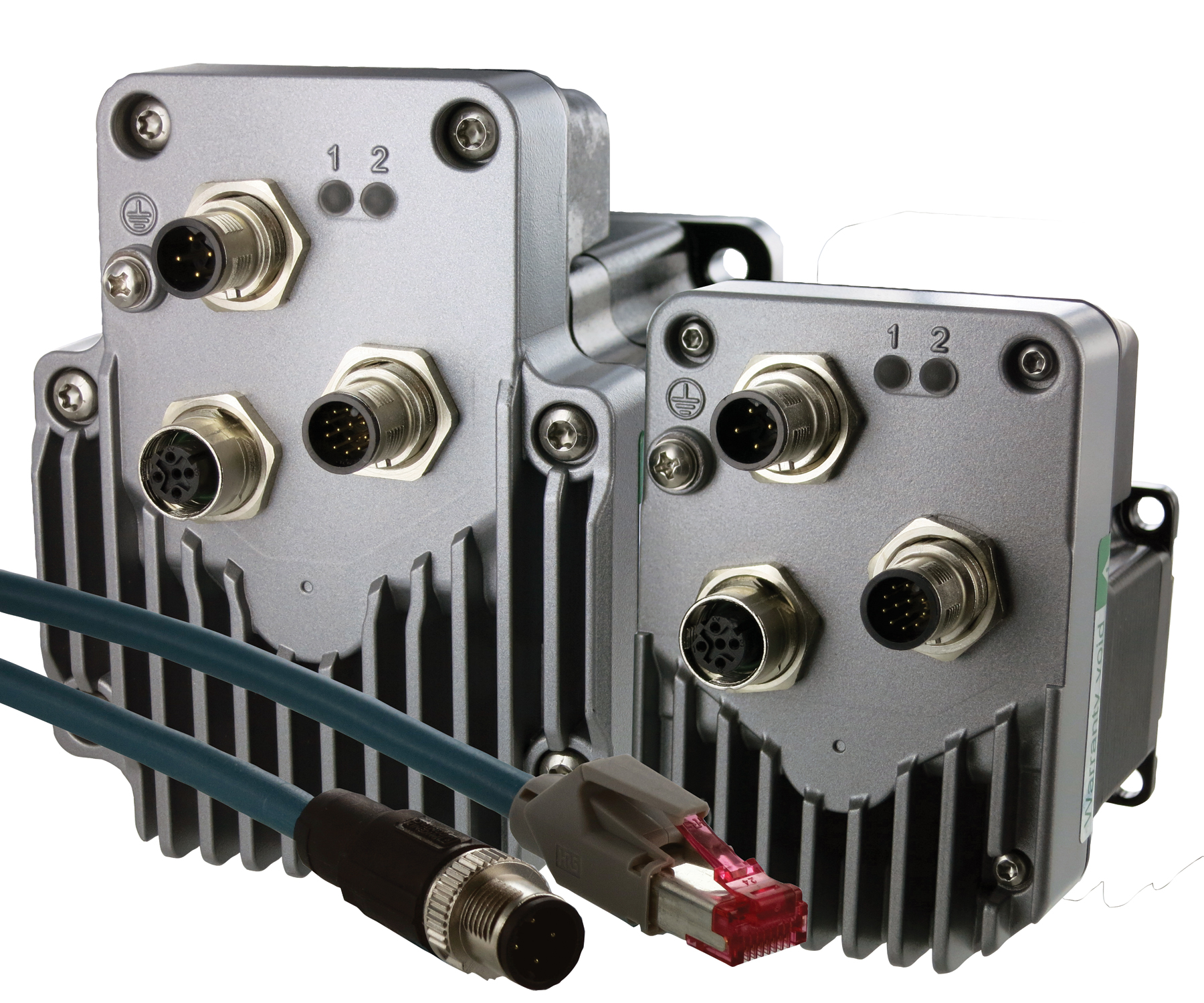
M12 Lexium MDrives integrate stepper motor, controller, I/O and drive electronics. They include high-torque step motors with drives from 12 to 70 Vdc and an internal encoder. In certain applications, LMDs can replace servomotors and lower overall design cost. Learn more at the Schneider Electric Motion page on the M12 lineup.

Engineers can implement stepper motor drives in numerous ways. Companies often produce pre-packaged drives that can run with a variety of microprocessors and motors. This means that that drive is prefabricated and the engineer has many decisions on where and how to use it. Beyond this, some companies even offer complete off-the-shelf boards. These combine the drive and microprocessor … so the engineer programs the unit with instructions on the angles to which the stepper motor must step. Designing a custom drive is also possible. In terms of price paid for upfront costs, this is often the cheapest option. Tip: consider more than just cost when implementing drives. Building drives takes much time and work and relies on in-house expertise. For complex systems, it is often better to buy than build.

During operation, drives receive step and direction commands from an indexer or control system. In most cases, the indexer must also provide and manage acceleration, steps per second, distance and deceleration controls. The indexer collects high-level commands from the host computer and generates the needed step and direction pulses. Some versions can also run as standalone controllers after downloading and storing data to non-volatile memory. Here, the drive translates control data into electrical signals that run the step motor.

Beyond this, stepper motors also require power supplies, logic sequencers, switching components and a clock pulse source. Many drives incorporate these already, but some more basic drives contain only the final power stage without any controller electronics to generate step sequences. These need power supplies to regulate output.

To determine what kind of drive to use, engineers must analyze the load, including determining friction and inertia loads, torque required and power consumption, and damping required. Next, engineers must determine what kind of motor-drive combination works best. Tip: here, use performance curves provided by manufacturers and compare them to the intended design requirements.

For more information, visit:

Omega Engineering’s technical page on stepper motors

AMETEK’s Haydon Kerk stepper-drive landing page

University of Texas at Austin PDF: Stepper motor and driver selection

Design World article: Building versus buying a stepper motor

You might also like

Filed Under: DC Motors, Drives + Supplies, FAQs + basics, Motors, Stepper Drives, Stepper Motors

Reader Interactions

Leave a Reply

You must be logged in to post a comment.

Primary Sidebar

LEARNING CENTER

Design World Learning Center

Motion Control Handbook

“mct
EXPAND YOUR KNOWLEDGE AND STAY CONNECTED
Get the latest info on technologies, tools and strategies for Design Engineering Professionals.

RSS Featured White Papers

  • Robotic Automation is Indispensable for the Logistics Industry’s Continued Growth and Success
  • Reliable Linear Motion For Packaging Machines
  • Polymers Outperform Metals In Precision Gearing

Footer

Motion Control Tips

DESIGN WORLD NETWORK

Design World Online
The Robot Report
Coupling Tips
Linear Motion Tips
Bearing Tips
Fastener Engineering.
Wire and Cable Tips

MOTION CONTROL TIPS

Subscribe to our newsletter
Advertise with us
Contact us
About us

Copyright © 2025 · WTWH Media LLC and its licensors. All rights reserved.
The material on this site may not be reproduced, distributed, transmitted, cached or otherwise used, except with the prior written permission of WTWH Media.

Privacy Policy | RSS