Here, the focus is on motors as key elements of motion control systems, and the way in which they help achieve true precision in motion control applications.
Corey Foster · Director of Automation Sales & Application Engineering | Valin Corporation
The central focus of this series of articles is how achieving true precision requires a deeper understanding of the full motion control system, from the mechanics to the motors, drives, and controls. The fact is that there are details that do not show up on data sheets but can make or break the high-performance expectations of an entire system. As motion systems push beyond micron-level accuracy, traditional specifications start to lose their typical meaning and relevance, making nuanced engineering decisions essential.
This series continues to explore how each layer of technology contributes to the overall systems performance. The first article in the series looked at the mechanics, examining critical factors that are often overlooked such as bearing deflection, body stiffness, and structural smoothness. In this second part of the series, we’re discussing how motor design and construction can cause torque ripple which affects everything else. In the third article, the discussion will center on the importance of the designs and features of drives and controls for the system, and lastly, the series will end with the critical elements of the system integration itself.
In the previous article, we discussed three general tiers of performance to consider in a motion control system: basic, specification-level, and pushing-beyond-the-specifications performance. This applies to motors as well.
Motors: A hidden variable of performance
Many applications call for simply grabbing a motor out of a catalog. In most cases, practically any motor will do. People will often ask for motors about “yea big” holding their hands up like they are holding a ball of some kind as if size defines what they need. Those are typically ac motors where the size generally does tell a person how much power it puts out. Alternatively, it is simply based upon the size of the mechanics the motor is expected to be mounted to. This is because motors are physically limited by those mechanics. Neither shafts nor mounting flanges can be too large or too small for many actuators. This approach is great for getting a conversation started and putting things together when the situation calls for it. In these situations, people don’t care about the motor being over-sized because that gives them a large torque margin. Then, they don’t have much expectation for speed or positioning as they will “get by” with whatever they do achieve. This also allows them to look only at cost and find the least expensive option they can.
There is a reason, though, why there are plenty of articles, resources, classes and software programs dedicated to sizing motors. I’ve even written and taught them myself while having used probably 30 different tools over the years. These are all important when a process requires something more than a motor about “yea big” or even a motor defined simply by power such as a 200 W or 1 hp motor. The exercise of “sizing” a motor is more about selecting the optimal size of motor for the application’s torque and speed requirements without breaking the bank.
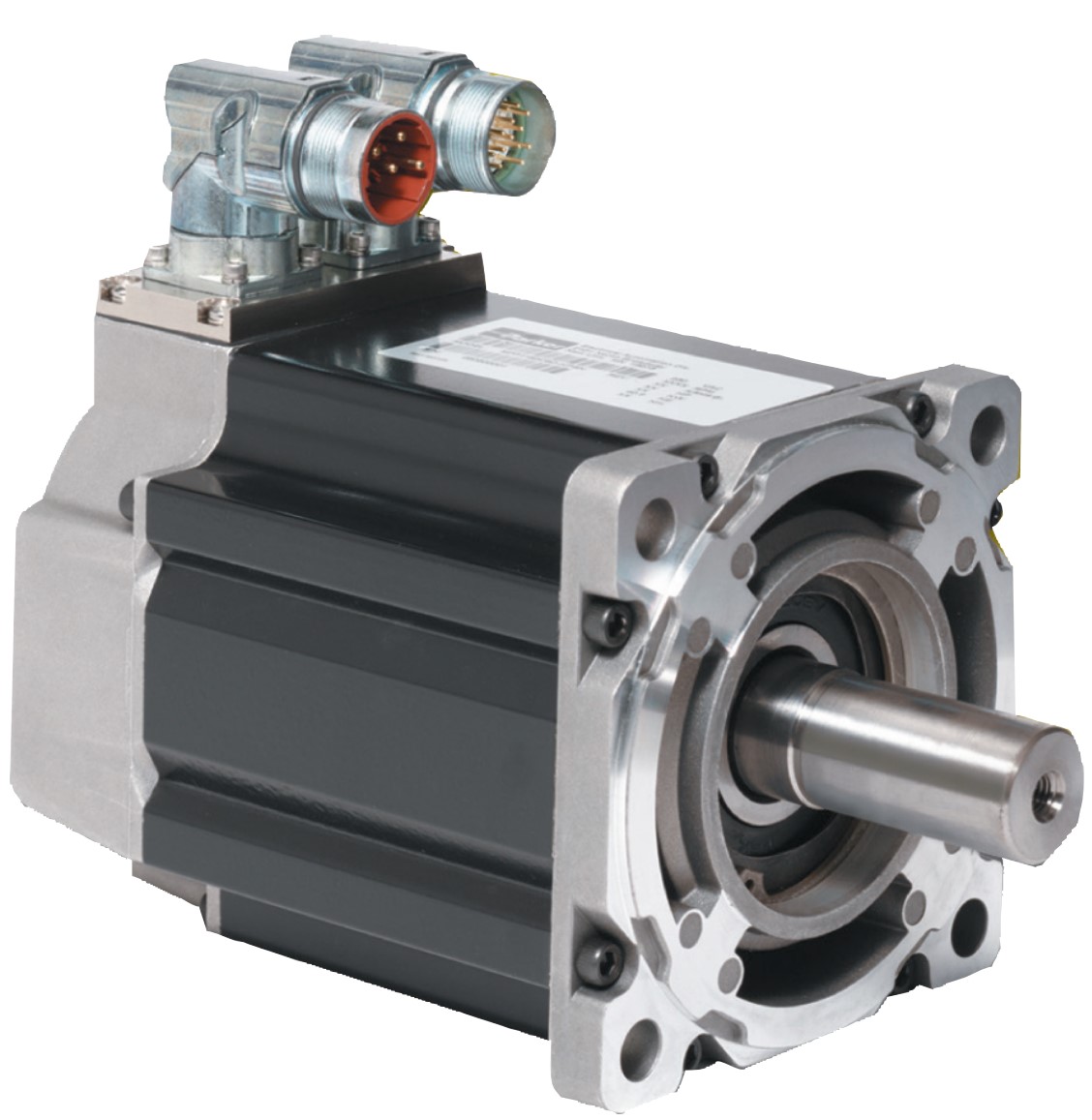
The motor sizing calculations always include hidden assumptions, such as the ambient temperature, the airflow for cooling, and the heatsink where the motor is mounted. Those assumptions will even include the orientation of the motor, the size of the drive powering it, and whether the power input is clean.
Factors that are usually not included in the motor sizing process are the motor design, the feedback options, and the cable installation. That is why we actually refer to this as the sizing and “selection” process, with “selection” being a key part.
Issues to watch for when the selection portion isn’t done well are torque ripple (causing velocity ripple and degrading smoothness), jumpy motion (caused by low-resolution feedback or electrical noise), and lower-than-expected torque output (caused by poor thermal management).
A common question during this process for some applications concerns what the expected velocity ripple is for a given motor. This is important for applications that need smooth velocity, such as scanning and inspection applications. I have yet to find a manufacturer that will give this as a specification, though. They may provide a guideline, but ones that usually sound like a politician trying not to answer the question. This is because velocity ripple is caused by several factors, some of which are out of the manufacturer’s control. It starts with the torque ripple (the variance in torque from phase to phase as the motor turns). However, tuning, loading, and application factors all come into play.
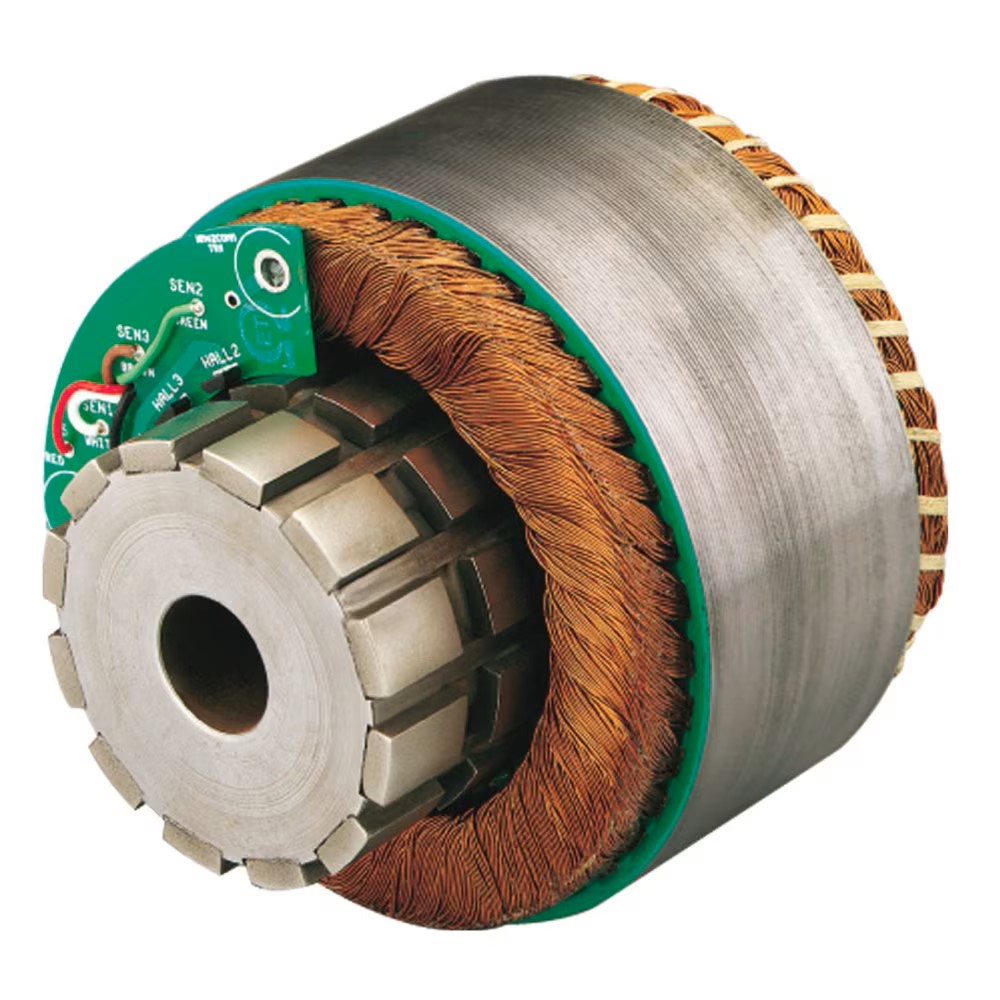
Motor designers aim to minimize the attraction forces between motors’ magnets and coils. Those forces provide the torque and motion control, but they also cause torque ripple and other problems. The goal, therefore, is to cause a tension between them that is both useful and minimizes the problems. As always when designing a product, there are other give-and-takes to the various design options. In the case of rotary motors, torque versus smoothness, torque versus high inertia, speed versus cost, speed versus torque, cost versus thermal management, and smoothness versus low inertia are all battlegrounds of contention. Motor manufacturers typically have two or three different lines of motors that, to the untrained mind, seem redundant to each other. However, to the trained one, they have different application niches.
For applications with the highest performance demands, motor quality should also be considered. One may think that all motors are created equal within a given class, but the old axiom of “you get what you pay for” usually rings true. Here are some factors that will have an impact on motors in high-performance applications:
- Poor winding consistency will cause motor torque ripple
- Great rotor balance can allow for higher motor velocities
- Bearings will affect efficiency and smoothness
- Encoder alignment will affect efficiency and smoothness
- Housings will affect heat dissipation and resonance points
- Magnets affect the torque output and can limit peak velocities
For example, there is one standard motor that typically peaked out around 7,000 rpm. However, when special care was taken to balance the rotor precisely, filter the bearing grease so it was extra smooth, and use different feedback to allow for higher frequency output, the motor was able to hit 12,000 rpm. Clearly, this motor would cost significantly more than its standard brethren.
When the motor isn’t sized and selected properly, especially for high-performance applications, a motor mismatched to the actuator means the control loop can become unstable, the specifications of the mechanics are not achieved, and the overall investment in the high-performance actuator is wasted.
Read the other installments in this series:
Part 1: Layers of performance and specifications in motion control
Part 3: Layers of performance and specifications in motion control
Part 4: Layers of performance and specifications in motion control

Leave a Reply
You must be logged in to post a comment.