• Skip to primary navigation
  • Skip to main content
  • Skip to primary sidebar
  • Skip to footer
  • Advertise
  • Subscribe

Motion Control Tips

Automation • Motion Control • Power Transmission

  • News
    • Industry News
    • Editor Blogs
  • Controls
    • HMIs
    • PC-Based Controllers
    • PLCs + PACs
    • Stand-Alone Controllers
    • Software
  • Drives
    • Servo Drives
    • Stepper Drives
  • Encoders
    • Absolute Encoders
    • Incremental Encoders
    • Rotary Encoders
  • Mechanical
    • Bearings
    • Brakes + Clutches
    • Belt + chain
    • Couplings
    • Gears + Gearing
    • Lubrication
    • Shock + Vibration Mitigation
    • Springs + Rings + Seals
  • Linear
    • Actuators
    • Linear Motors
    • Linear Encoders
  • Motors
    • AC Motors
    • DC Motors
    • Brushless Motors
    • Gearmotors
    • Piezo Motors
    • Servo Motors
    • Stepper Motors
  • Systems
    • Conveyors + linear transport systems
    • Gantries + Stages
    • Rotary Tables
    • Grippers + End Effectors
    • Robotics
  • Networks
    • Connections + Sliprings
    • Fieldbuses
    • I/O
    • Sensors + Vision
  • Resources
    • FAQs
      • Motion Casebook
      • Motion Selection Guides
    • Suppliers
    • Video
You are here: Home / Controls / PCL61x4 series high-performance servo/stepper controller chips from Nippon Pulse

PCL61x4 series high-performance servo/stepper controller chips from Nippon Pulse

April 27, 2015 By Patrick Curran Leave a Comment

Nippon Pulse has released its newest series of motion controller chips, the PCL61x4 Series. PCL61x4 is a series of two high-performance servo/stepper controller chips: the PCL6114 single-axis chip and the four-axis PCL6144 chip.

The PCL61x4 series has some improved features over the PCL61x3 series, a similar chip series in the Nippon Pulse family of products. The most important new feature is the available SPI serial bus for 4-wire connection to augment the existing 8/16-bit parallel bus. The PCL61x4 series also features programmable software limits and 27 event factors – four more than the PCL61x3 series – in order to initiate interrupt signal output. In addition, the new series maintains all the same advanced features as the PCL61x3 Series: built-in pre-registers for continuous operation, linear interpolation, nine major operating modes, and input terminals for manual pulsers, jog switches, and limit/homing switches.
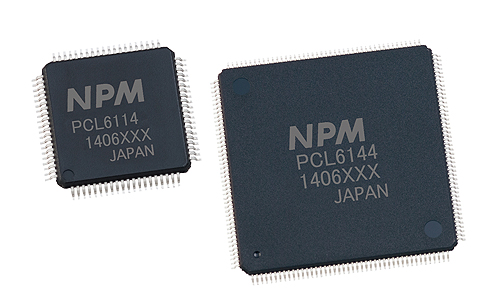
Nippn-Pulse-PCL61x4-Two-Chip-Series-controller-chips

This chip series will benefit Nippon Pulse customers who require improved operational control and faster motion for their applications. The chips work well with high-speed, high-resolution linear motors in industrial settings. They make ideal controllers for our Linear Shaft Motors in high-precision applications such as semiconductor processing or microscopic image scanning.
All chips in both the PCL61x4 and PCL61x3 series are RoHS compliant.

Nippon Pulse America Inc.
www.nipponpulse.com

You might also like

Filed Under: Controls, PLCs + PACs Tagged With: Nippon Pulse

Reader Interactions

Leave a Reply

You must be logged in to post a comment.

Primary Sidebar

LEARNING CENTER

Design World Learning Center

Motion Control Handbook

“mct
EXPAND YOUR KNOWLEDGE AND STAY CONNECTED
Get the latest info on technologies, tools and strategies for Design Engineering Professionals.

RSS Featured White Papers

  • Robotic Automation is Indispensable for the Logistics Industry’s Continued Growth and Success
  • Reliable Linear Motion For Packaging Machines
  • Polymers Outperform Metals In Precision Gearing

Footer

Motion Control Tips

DESIGN WORLD NETWORK

Design World Online
The Robot Report
Coupling Tips
Linear Motion Tips
Bearing Tips
Fastener Engineering.
Wire and Cable Tips

MOTION CONTROL TIPS

Subscribe to our newsletter
Advertise with us
Contact us
About us

Copyright © 2026 · WTWH Media LLC and its licensors. All rights reserved.
The material on this site may not be reproduced, distributed, transmitted, cached or otherwise used, except with the prior written permission of WTWH Media.

Privacy Policy | RSS