 Updated May 2015. || Consider key design parameters when selecting a gearmotor for a motion control application.
Step One: As the motor or gearmotor selection process begins, first gather the relevant technical and commercial requirements.
This first step is often overlooked, but it’s a critical component in the design process. The gathered information will then be used in the selection process and will dictate the ideal motor for the application. Failure to gather the proper inputs can lead the designer down an unintended path. It’s helpful to use an application checklist when developing the motor specification. These parameters, along with some project specific requirements, will be helpful when navigating the selection process.
Step Two: Next, consider what type of motor technology best suits the intended application.
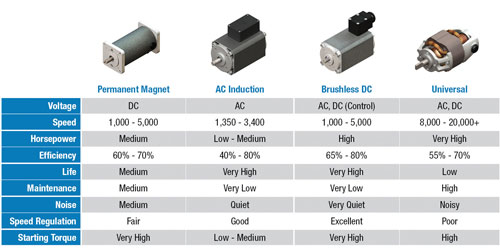
Using the design inputs, the Motors Quick Reference Guide (below) can be used as a selection matrix in the first step of the decision process. This reference guide details four common motor types and provides general information to consider when selecting each motor. Because each application has its own unique characteristics, it’s important to determine which of the parameters (e.g. horsepower, efficiency, life, starting torque or noise ratings) are most important to the specific application.
Read the related article: What is a gearmotor? Technical Summary
During the motor selection, look at the required speed and torque of the application. It should become evident if the motor chosen requires a gearbox to meet the necessary requirements. If a gearmotor is necessary, that adds another level of complexity … and several additional criteria need to be evaluated.
Step Three: Select motor and gearbox separately and assemble them, or select a pre-engineered gearmotor.
 Know that motors and gearboxes can be mixed and matched as needed to best fit the application, but in the end, the complete gearmotor is the driving factor.
There are a number of motors and gearbox types that can be combined …
… for example, the right angle worm, planetary and parallel shaft gearboxes can be combined with permanent magnet DC, AC induction, or brushless DC motors.
Though there are a vast number of different motor and gearbox combinations available, not just any one will work for the application. There will be certain combinations that will be more efficient and cost-effective than others.
Knowing the application and having accurate ratings for the motor and gearbox is the foundation for successfully integrating the gearmotor into the system.
There are two methods for selecting a gearmotor:
Method 1: Select motor and gearbox separately and assemble
Method 2: Select a pre-engineered gearmotor
While both methods are effective at finding the most compatible gearmotor, Method 2 reduces design time and project risk for the designer. When selecting a pre-engineered solution, the manufacturer has done much of the heavy lifting to ensure that the motor and gearbox combination will work properly together. Because performance calculations and testing have been performed by the manufacturer, this will minimize gearmotor failures caused by miscalculations or improper component matching.
Read the related article: How to Size and Select a Gearbox: A Motion Engineer’s Guide
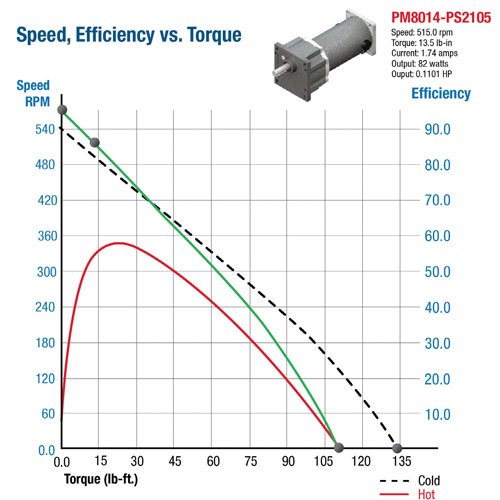
Focusing on Method 2 and looking back to the gathered gearmotor performance data, the speed and torque required for the application is critical in selecting the gearmotor combination. Using the speed and torque measurements the designer can then select the manufacturer’s performance curves that match the application needs. The gearmotor curve combines the performance of the motor and gearbox by displaying speed, torque and efficiency. If a complete gearmotor assembly is purchased from a manufacturer, this curve is provided by the vendor.
Finally, after selecting a few performance curves that appear to meet the application needs, it’s important to review the design limitations. Look for the following information in the manufacturer’s performance calculations and use it to determine if the chosen gearmotor will cause any issues within the application:
• Thermal characteristics
• Full-load gearbox torque
• Gearbox input speed
• Gearbox yield strength
• Intermittent duty considerations
Step Four: Once the gearmotor has been chosen and installed in the application, perform several test runs in sample environments.
These should reflect typical operating scenarios. If there is extreme motor heat, unnatural noises or obvious motor stress, repeat the motor selection process or contact the manufacturer. It’s important to take the time and put in the effort to properly select a motor because a hasty decision and lack of testing can cause a host of problems with the gearmotor and could possibly damage the application.
Though the gearmotor selection process can be arduous, a properly selected gearmotor can last for years and will optimize the application to its peak potential and efficiency. From a company perspective, an optimal gearmotor will also reduce operating costs and increase plant productivity.
Read the related article: What are Power-Transmission Gears? Technical Summary

Leave a Reply
You must be logged in to post a comment.