The winners of the 2026 Leadership in Engineering Achievement Program (LEAP) Awards were just announced in a digital ceremony, with products across numerous categories — including Motion Control.
The LEAP Awards are judged by the engineering community itself. Each year, the Design World editorial team assembles an independent judging panel made up of OEM design engineers and academic professionals.
This year’s three motion control winners each get more out of hardware a machine already carries. A holding brake from Warner Electric reports absolute position, Husco’s steer-by-wire system turns the operator’s own hands on the wheel into a power source during an electrical fault, and Sun Hydraulics’ flow meter threads into a standard T-16A cartridge valve cavity.
In the Motion Control category, the winning submissions for this year are as follows.
Motion control: Bronze
Sun Hydraulics LLC • Cartridge-Style Flow Meter, QMEH
Sun Hydraulics (a Helios Technologies company) returns to the motion control winners’ list this year after taking the 2025 Gold for its ENERGEN cartridge valve, which converts hydraulic power into electrical power. This time the honors go to the QMEH, a variable-area, cartridge-style flow meter that fits Sun’s industry-common T-16A cavity (Series 3). That lets machine builders install flow measurement directly in a manifold cavity.
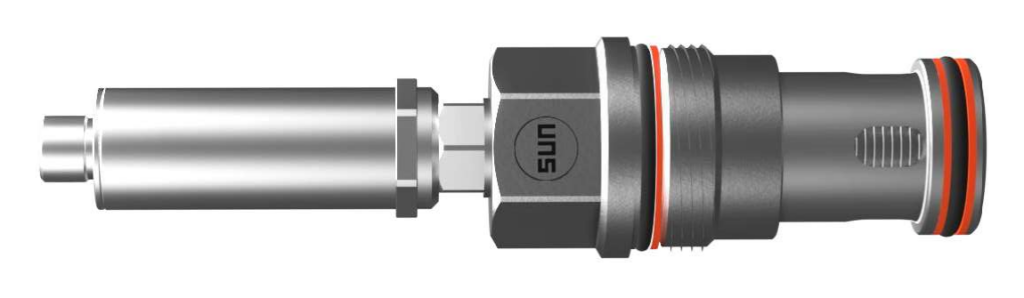
The QMEH measures flow from port 1 to port 2. A custom-built sensor detects flow and outputs an electrical signal proportional to the flow rate — either 4 to 20 mA or 0.5 to 4.5 V. With power applied and no flow, the output rests at 4 mA or 0.5 V and rises to 20 mA or 4.5 V at the upper limit of the flow range. The meter comes in four ranges of 15, 30, 135, and 190 L/min. (4, 8, 35, and 50 gpm), and each unit is pre-linearized and calibrated at the factory. Accuracy is ±10% of full scale, repeatability is 0.6% of full scale, and maximum response time to a 0 to 100% step input is 500 msec. Sun notes that the 135 and 190-L/min. versions perform best with a port 2 hit diameter larger than 1 in.
All ports are rated to 350 bar (5,000 psi) maximum operating pressure, and the meter is insensitive to backpressure up to that rating. Sun validated performance with a fluid at 24 cSt; maximum capacity begins to decrease as viscosity rises past 50 cSt, with a 12.5% decrease observed at 200 cSt. (Flow in fluids more viscous than 200 cSt can’t be reliably measured with the QMEH.)
The QMEH features a patented position sensor (U.S. Pat. No. 12,484,150) with CE and E-mark approval, and the unit meets the EMC standards IEC 61000-6-4:2018 and IEC 61000-6-2:2016. It runs on a 6 to 32-Vdc supply with reverse-polarity protection and terminates in an M12 four-pin connector. Ruggedness specs include an IP69K rating (with an IP69K-rated mating connector), vibration resistance to 6.8 g peak at 33.3 Hz, shock resistance to 49 g peak, and an operating temperature range of −25° to 80° C. Seal options include EPDM, Buna, extended-temperature Buna, and Viton.
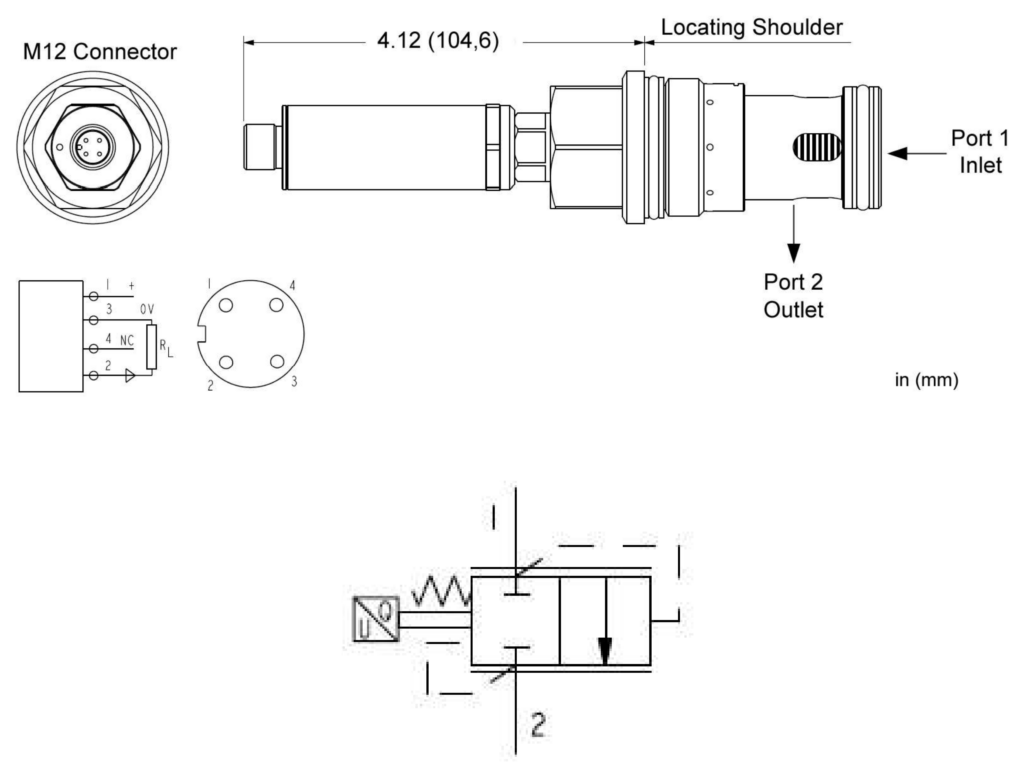
Target applications include hydraulic power units, aerospace ground support test equipment, telehandlers, and excavators.

Motion control: Silver
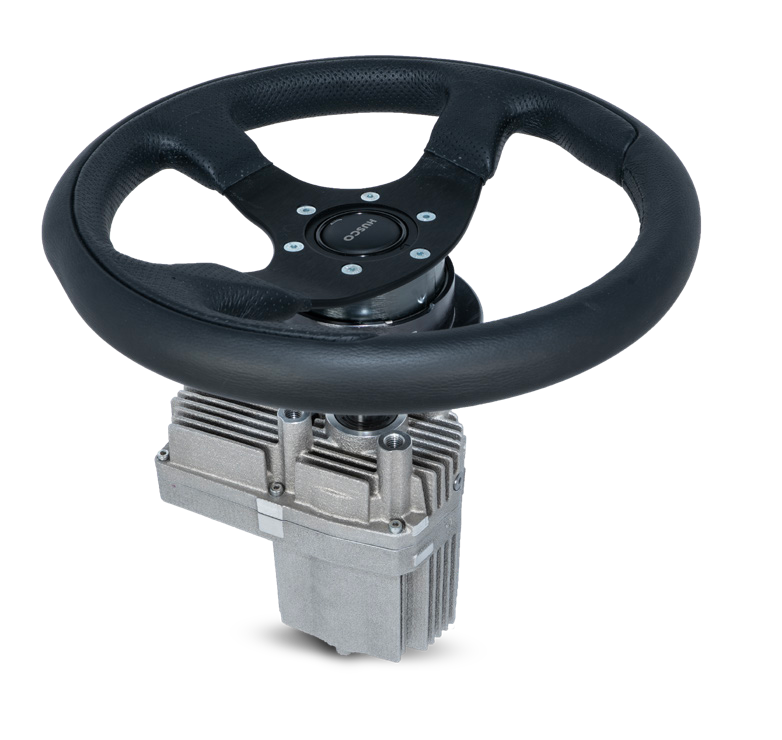
Husco • GenSteer
Steering is one of the primary motion axes on an off-highway vehicle, and it has traditionally run through a hydraulic orbital steering control unit (SCU). The orbital has long been favored for its reliability: if hydraulic or electrical power fails, it can act as a pump to power the steering cylinder directly from the operator’s input at the wheel.
Steer-by-wire (SbW) systems offer OEMs automation, configurable steering characteristics, reduced mechanical complexity, and an improved operator experience. So what’s the catch? Conventional SbW architectures achieve fail-functional safety with redundant controllers, backup batteries, duplicate electronics and software, and additional wiring. That adds cost, complexity, packaging constraints, and development effort — and has limited large-scale SbW adoption.
Husco’s GenSteer is a fail-functional SbW system that maintains continuous steering capability without redundant electronics. In normal operation, electronic sensors capture the operator’s input, and a control unit processes it to command electrohydraulic (EH) valves delivering precise, tunable steering feedback. During an electrical fault, GenSteer transitions to generator mode — converting the operator’s steering input into electrical energy that is immediately used to actuate the steering system. That keeps the steering axis under control with no external power source, backup battery, or duplicate controller.
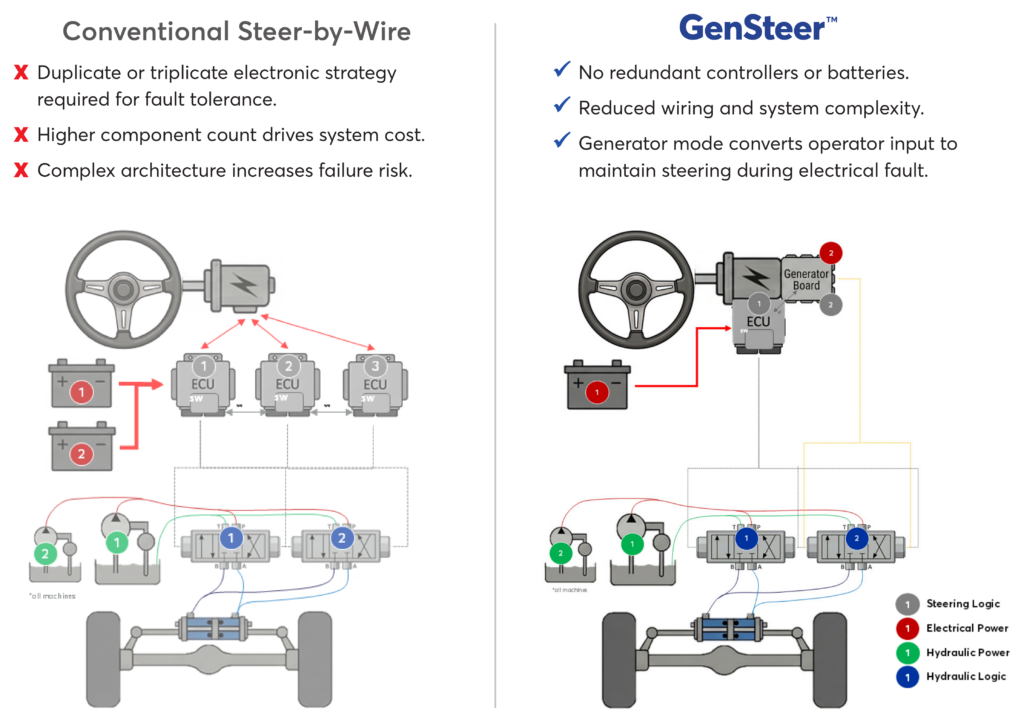
The key was the force-feedback motor that SbW operation already requires. Husco developed a patent-pending way to use that existing SbW hardware beyond its original purpose … an approach the company calls “redundancy without replication.” Husco has filed multiple patent applications covering the fail-functional energy generation architecture, the integrated steering control system, and methods for maintaining steering during electrical faults (including international application WO 2025/166278 for a fail-operational steer-by-wire steering system).
The GenSteer human machine interface (HMI) houses the EH valve controls, drivers, and sensors in one compact assembly. High-resolution sensors track steering angle and torque, while embedded algorithms manage feedback, return-to-center, and adaptive steering feel. Consolidating these functions reduces wiring, external components, and potential failure points while simplifying installation. According to Husco, eliminating the redundant controllers, backup batteries, and complex harnessing lets GenSteer reach cost parity with traditional high-specification orbital steering systems.
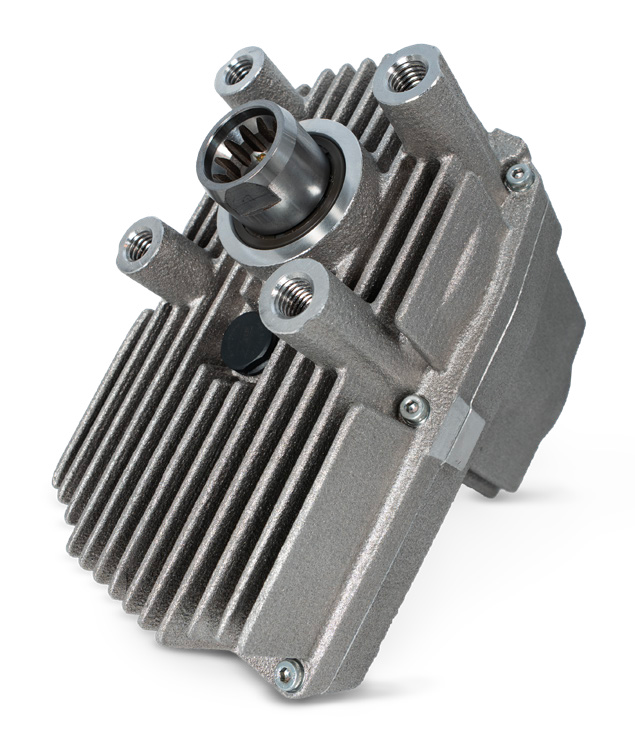
Because GenSteer is software-defined, OEMs can tune steering response by machine, application, or brand. Auto-guidance, driver-assist functions, and future autonomous capabilities can run on a common steering platform with no fundamental hardware redesign, and over-the-air updates can deliver new capabilities throughout the life of the machine. GenSteer is built from proven motors, sensors, control units, and hydraulic components; it has been validated in prototype applications and is designed for integration into existing vehicle platforms with minimal redesign. Target applications include construction, agriculture, mining, and material-handling equipment as well as electrified vehicle platforms and autonomous and driver-assist systems.
Motion control: Gold
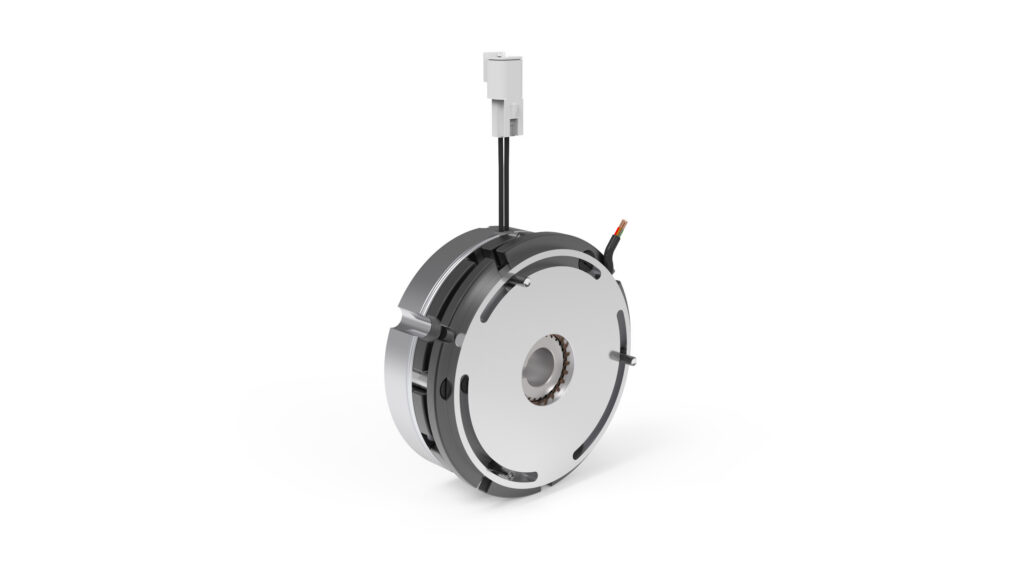
Regal Rexnord • Warner Electric Integrated Position Brake (IPB)
Electrification is reshaping braking requirements. On electrified machinery, service brakes see less use, while failsafe holding, long-duration static duty, and tight integration with the drivetrain become far more critical. As Regal Rexnord’s submission puts it, “Brakes are used less often, but they must perform more critical functions, for longer durations, with higher reliability.”
The Warner Electric Integrated Position Brake (IPB) from Regal Rexnord is a spring-applied, electrically released parking and holding brake engineered for exactly that duty. Because springs engage the brake and an energized coil releases it, the IPB holds its load with zero power — and engages in less than 100 msec in an emergency thanks to optimized coil and armature geometry. Its advanced friction materials maintain consistent torque even in harsh outdoor environments, and the design delivers low drag torque (to maximize EV range), wide temperature capability, and low-loss operation compatible with a PWM supply.
Inside the IPB, a high-performance electromagnetic brake shares one plug-and-play assembly with a factory-embedded absolute position sensor. That eliminates the separate encoder or resolver that would otherwise add 20 to 40 mm to the drivetrain; the IPB’s ultra-thin sensing package adds just 9 mm. So design engineers can shorten the overall powertrain or use the recovered axial length for additional motor windings and higher power density.
The sensor itself provides high-resolution SIN/COS or AB quadrature feedback, and its quadrature output is programmable independent of sensor diameter. Through-shaft designs are possible too. What’s more, the sensing uses no rotating magnets, so it has no dust sensitivity and no sealing requirements. It’s also immune to magnetic interference and stable under airgap variation.
Target applications include electric forklift trucks, automated guided vehicles (AGVs), autonomous mobile robots, compact construction equipment, agricultural machinery, industrial electric drivetrains, outdoor power equipment, boom lifts, and aerial work platforms. In fact, the IPB suits any electrified platform requiring failsafe holding plus position feedback. The design is patented in the United States and Europe.

Leave a Reply
You must be logged in to post a comment.