Now in its ninth year, the LEAP Awards program highlights engineering innovation from around the world. Once again, an independent panel of expert judges reviewed this year’s submissions and named gold, silver, and bronze winners across multiple categories.
The 2026 winners in industrial automation span an AI co-pilot for industrial connectivity, a programmable automation controller with built-in motion and network control, and fleet software that sends a quadruped robot on inspection rounds by itself. Here’s a closer look at each … from bronze to gold.
Industrial automation: Bronze
Software Toolbox — jonjon.ai
Software Toolbox designed jonjon.ai as an AI co-pilot and agent for the controls engineers, automation specialists, and system integrators who keep industrial systems connected, commissioned, and running. Its focus is the connectivity layer — programmable logic controller (PLC) drivers, industrial protocols, supervisory control and data acquisition (SCADA) and historian links, and edge-to-cloud data flows. In fact, jonjon.ai troubleshoots protocols including OPC UA, Modbus, EtherNet/IP, BACnet, DNP3, IEC 61850, MQTT, and MTConnect (as well as Allen-Bradley ControlLogix and Siemens S7 PLC families) across the 140-plus drivers in the Software Toolbox ecosystem.
So how does jonjon.ai keep its answers specific to industrial connectivity? The software uses retrieval-augmented generation (RAG) to ground its step-by-step answers in more than 1,500 Software Toolbox knowledge articles and decades of the company’s industrial connectivity experience. The engineer can type a natural-language question or upload a log file, SCADA alarm screenshot, PLC error screen, diagram, or configuration file (with images and text files to 10 MB) and get back likely causes, corrective actions, and the next diagnostic checks to run. That spares the engineer from retyping long alarm strings or combing through manuals, support tickets, and tribal knowledge in the middle of a production issue.
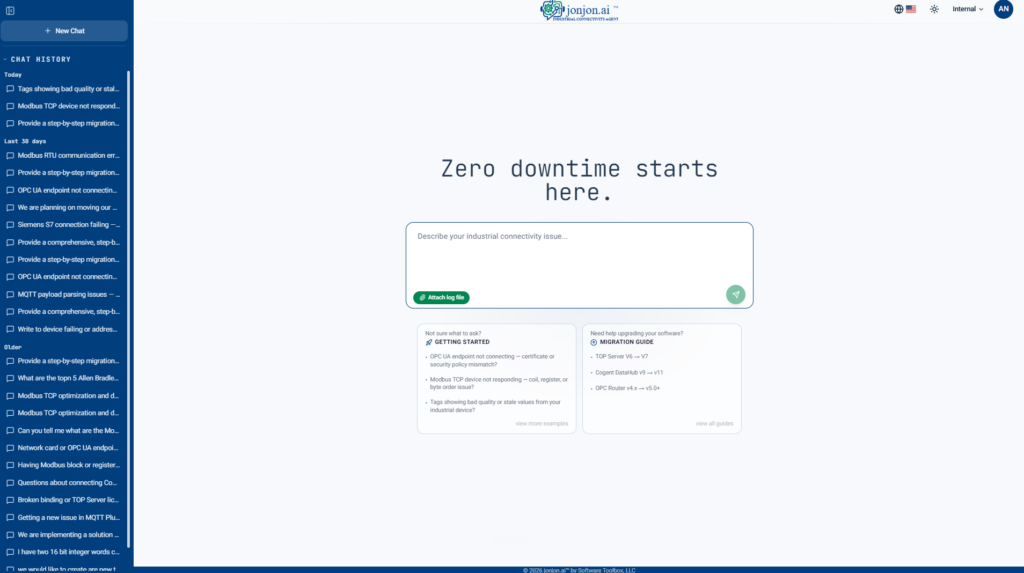
What’s more, jonjon.ai works in 11-plus languages (including English, Spanish, Mandarin Chinese, Arabic, French, and Swedish) and preserves protocol names and industrial terminology in each. Unified namespace (UNS) integration gives the software plant-specific context such as equipment hierarchy and MQTT topic structure. jonjon.ai can also generate custom migration guides and keep a persistent record of past troubleshooting sessions. That in turn supports shift handoffs and multi-day commissioning efforts.
Finally, Agent Mode scans connectivity conditions, surfaces exceptions, and prepares a prioritized list of likely issues before production is affected.
Recommendations stay human-in-the-loop throughout so engineers keep control over every corrective action.
Industrial automation: Silver
Mitsubishi Electric Automation — MELSEC MX Controller
The MELSEC MX Controller from Mitsubishi Electric is a programmable automation controller (PAC) that integrates sequence, motion, and network control into a single module. Inside is a multi-core microprocessor unit (MPU) that executes sequence, motion, and network tasks simultaneously on three independent processing cycles. That lets the MX Controller replace the PLC-plus-motion-controller combinations common on complex machinery — and reduce engineering overhead, cabinet space, and system latency in the process.
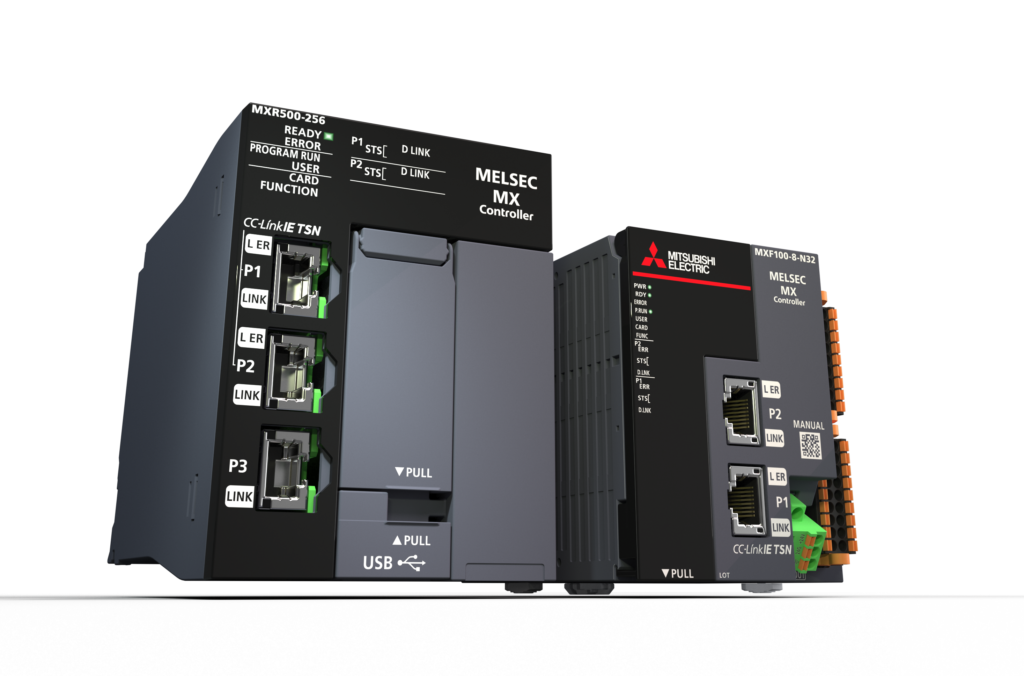
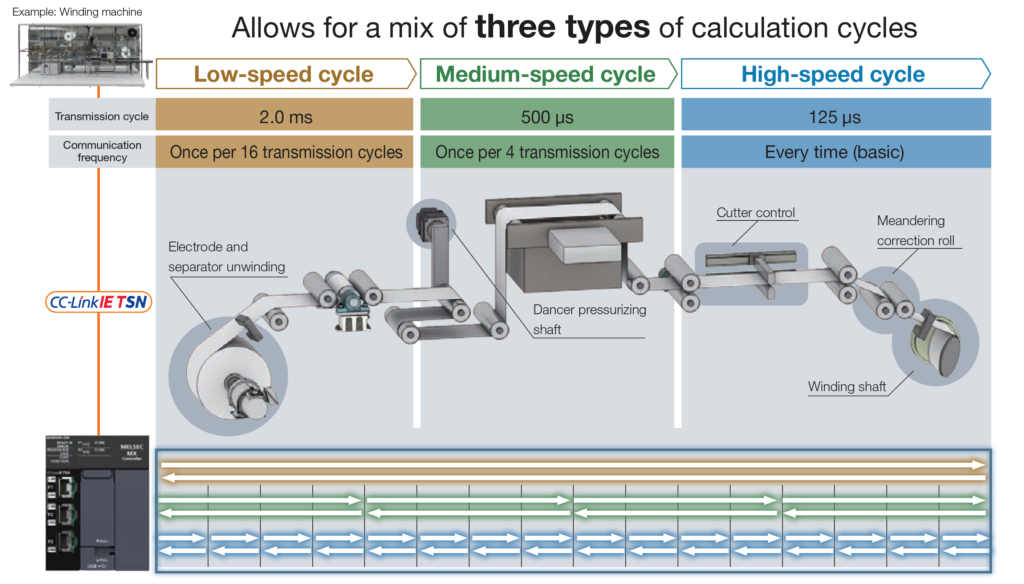
Built-in is CC-Link IE TSN for time-sensitive networking. This integrates control and information transmission on one deterministic, high-speed network. It also supports multiple communication and control cycle times at once, so high-speed and low-speed axes run together without compromising determinism.
Consider a winding-machine application: One MX Controller can handle low-speed (2.0-msec), medium-speed (500-μsec), and high-speed (125-μsec) cycles across functions such as electrode and separator unwinding, dancer pressurizing, and cutter control.
There are two models:
- The MX-R model handles motion control to 256 axes, connects to as many as 253 stations, holds programs to 80 MB, and works with iQ-R series base units, power supply modules, and many other iQ-R modules.
- The compact MX-F model handles motion control of up to 16 axes with 12 MB of program capacity and supports up to 30 general stations, so its drive system can include servos on as many as 46 axes.
Complementing the hardware is GX Works3 engineering software, which unifies sequence and motion programming, servo parameter setup, and diagnostics. Built-in total data recording, data-flow analysis, and AI-based analytics capture system behavior during abnormal conditions without halting production — which significantly reduces downtime during troubleshooting. For security, the MX Controller complies with IEC 62443-4-2 and uses digital certificates for encrypted communication as well as user authentication and role-based access control that separates asset management by role (such as end user or equipment manufacturer).
An OPC UA server function connects the MX-R model to upper-level systems, on-premises servers, and cloud environments. Target applications include multi-axis converting and winding machines, packaging and material-handling systems, machine tools with mixed-speed motion requirements, and battery, film, and web-handling equipment.
Industrial automation: Gold
Boston Dynamics — Orbit AIVI-Learning
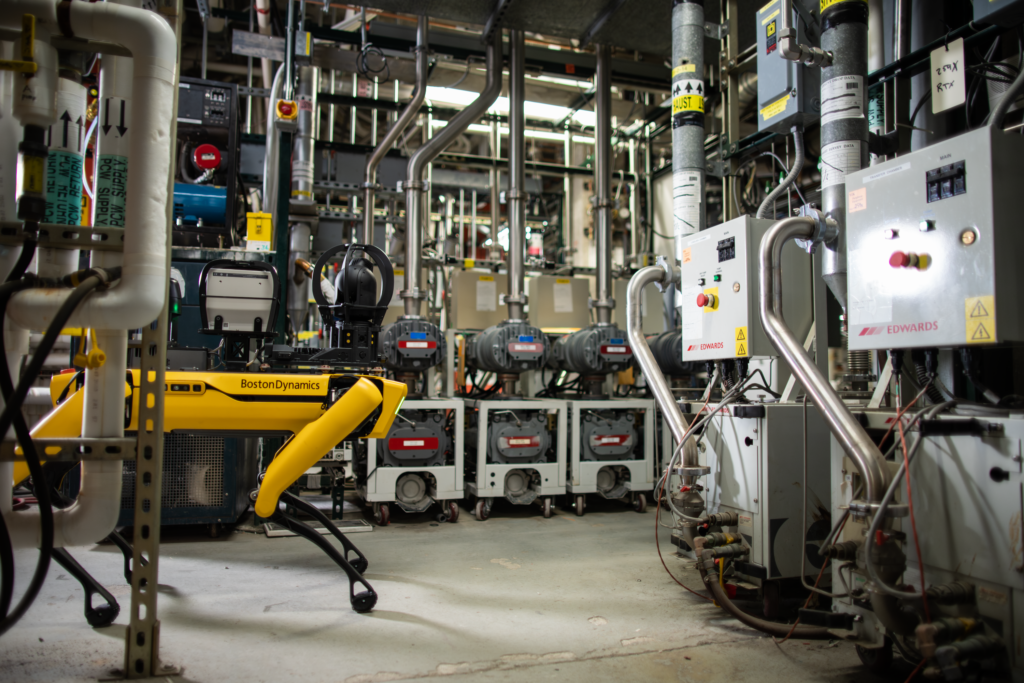
Boston Dynamics built its quadruped robot Spot to handle routine inspections in tough industrial environments, and the robot’s foundational design lets it navigate human spaces naturally, safely, and autonomously. The winning entry centers on Orbit (the fleet software that manages Spot) and Spot’s new 5.1 software release. Together they add AI-powered image analysis, remote inspection authoring, and new sensing hardware.
Spot can now autonomously patrol a facility and capture images at various points of interest. Orbit then analyzes those images with AI-powered vision-language prompts to flag issues such as spills, missing fire extinguishers, or equipment wear and tear. Mission setup is simpler, too. Previously, an operator had to physically walk Spot through a facility to program a new route. Now Site View Inspection Authoring lets a manager open a live digital map of the workplace, click any location, and remotely assign a new inspection task (such as checking a gauge or scanning for an air leak). Site View also provides a visual record for monitoring conditions over time, and a centralized dashboard manages multiple robots across different sites with customizable user roles and permissions.
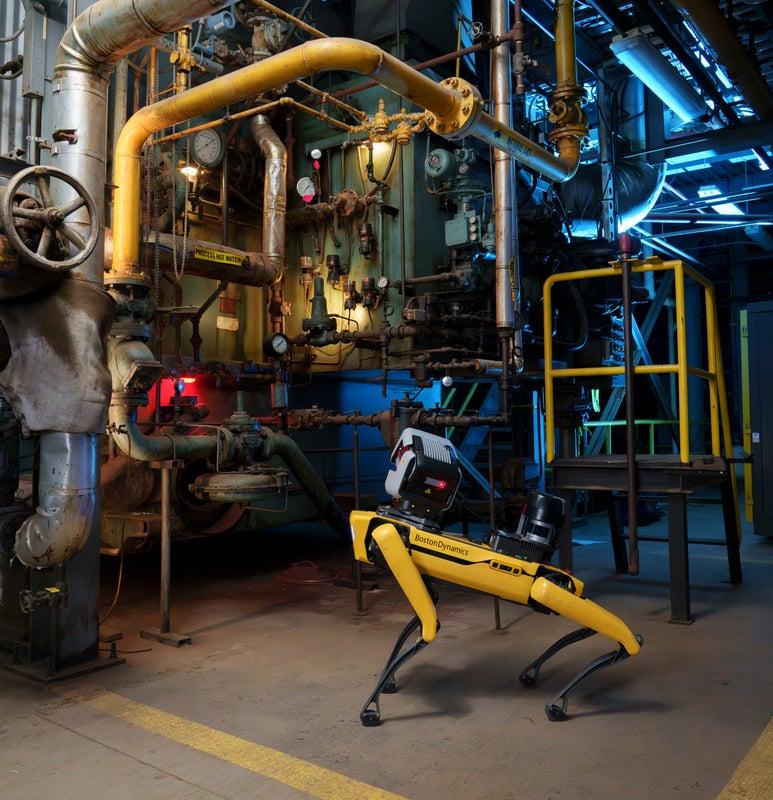
On the hardware side, the new Spot Cam 2 combines a 4K pan-tilt-zoom (PTZ) camera with 25x optical zoom, an integrated radiometric thermal camera for mapping temperatures, and a 360° spherical camera for full situational awareness. Eight adjustable LED lights illuminate pitch-black areas, and an integrated accessory bay accepts acoustic sensors that listen for air or gas leaks. That makes multimodal inspections possible: Spot can listen for acoustic air leaks, map temperatures, and record video of a single target simultaneously.
Potential applications include:
- Power Substations & Utilities: Spot autonomously patrols indoor control rooms and expansive outdoor gravel yards to routinely inspect critical high-voltage transformers for overheating components and equipment degradation.
- Manufacturing & Assembly Plants: Spot navigates dynamic factory floors filled with moving equipment, inventory, and personnel to capture consistent maintenance data and gauge readings without disrupting active production lines.
- Chemical, Oil, Gas, & Nuclear Facilities: Spot safely enters highly hazardous or contaminated zones, including decommissioned nuclear facilities, to monitor assets, track radiation levels, and detect invisible gas leaks without risking human lives.
- Data Centers & Infrastructure: Spot walks narrow server aisles to log ambient temperatures, catch overheating hardware early, and provide facility teams with highly accurate environmental reports.
- Off-Hours Facility Security: Spot acts as an independent guardian during off-hours, using its advanced cameras to perform scheduled patrols, flash warning lights, and instantly alert human staff if an unauthorized person is detected on site.
- Public Safety & Emergency Response: Spot is deployed by bomb squads, tactical teams, and search-and-rescue personnel to safely explore low-visibility, dangerous, or structurally compromised environments, providing first responders with live, remote situational awareness.
In fact, Spot can now pass through a facility’s automatic doors (including motion-activated and badge-access systems) on its own and sans a robotic arm accessory. At the time of entry, this feature had been deployed with 18 beta customers and had opened 2,500 doors. New security-patrol behaviors automatically pause the robot, flash warning lights, and alert managers if an unauthorized person is detected.
Consider Michelin, which has Spot running seven different missions and monitoring more than 700 pieces of equipment in its tire manufacturing plant. In its first few months on the job, the robot generated 72 work orders to fix overheating equipment and repair air leaks. At Cargill, Spot found an air leak in a centrifuge two minutes after powering up for a demonstration. Today the robot conducts routine maintenance inspections and visual safety checks via Orbit in Cargill’s oilseed crush and refinery plant as part of the company’s Plant of the Future initiative. Nestlé Purina and AB InBev are among the other users already taking advantage of the Orbit updates.

Leave a Reply
You must be logged in to post a comment.