Electric aviation will arrive through thousands of incremental improvements in electric motors, power electronics, thermal management, controls, materials, certification, and manufacturing — one subsystem at a time. But more than the technologies that dominate headlines, electric motors will help determine how efficient, reliable, and electrically capable the next generation of aircraft becomes.
Duggan Flanakin · Policy analyst | Committee For A Constructive Tomorrow
Electric and hybrid-electric propulsion are moving from laboratory demonstrations into flight programs. Most coverage of that shift focuses on batteries, turbines, and aircraft design. Less attention goes to the electric motors that convert electrical energy into controlled mechanical motion, even though motors will play a foundational role across propulsion, actuation, auxiliary systems, unmanned aircraft, and advanced air mobility (AAM).

What’s driving aviation toward electrification? Two pressures — the need for better efficiency and continued growth in air travel. Boeing’s 2026 Commercial Market Outlook forecasts that global air travel demand will double over the next 20 years, with the worldwide commercial fleet growing nearly 80% to more than 50,000 aircraft by 2045. Boeing estimates airlines and cargo operators will need nearly 44,000 new airplanes during that period.
That means aircraft must become more efficient without sacrificing safety, reliability, performance, or maintainability. Electrification will likely be part of the answer, and it will take several forms.
Battery energy density still limits fully battery-electric propulsion on large commercial aircraft (and research to address those weight and energy-density limits continues). More immediate opportunities include more-electric aircraft architectures, hybrid-electric propulsion, electric actuation, auxiliary systems, unmanned aircraft, and AAM.
Why do electric motors matter beyond propulsion? On an aircraft, electric motors can drive pumps, fans, actuators, valves, environmental-control equipment, flight-control mechanisms, landing gear, and other subsystems. On unmanned aircraft and smaller electric platforms, motors also serve as part of the propulsion system.
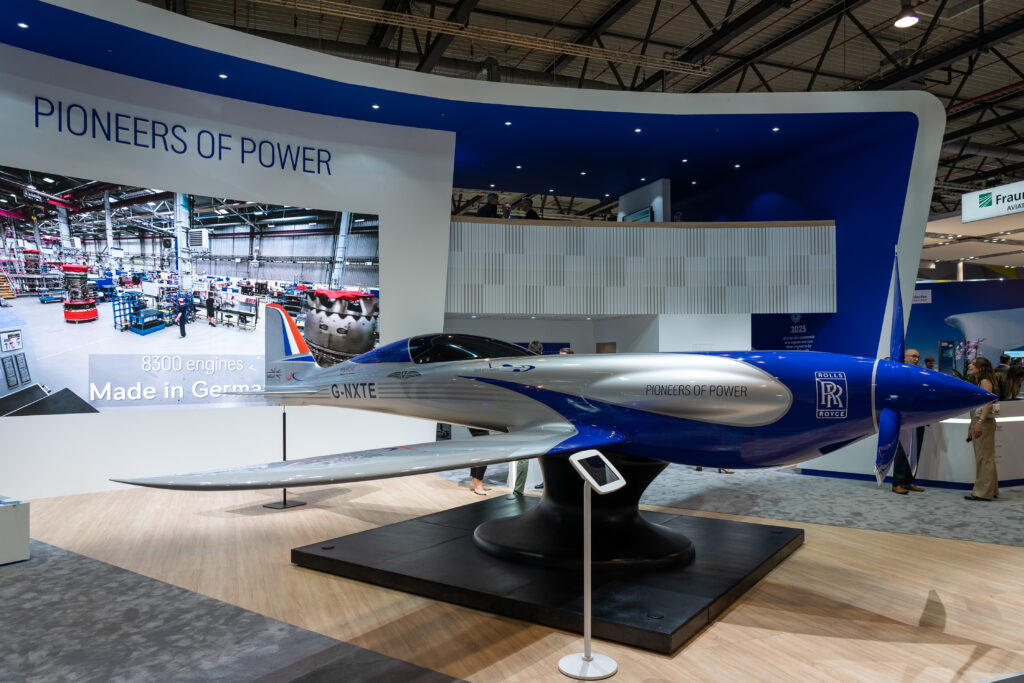
What makes motor engineering challenging in aviation? Certification is what separates an aircraft motor from one built for the factory floor. Aircraft components must be qualified for vibration, temperature extremes, electromagnetic compatibility (EMC), fault tolerance, containment, and other safety-critical requirements.
An existing industrial motor can’t simply be installed in an aircraft. To be clear, though, the engineering behind industrial motors (precision motor design, motion control, customization, thermal monitoring, and sealing) gives motor makers a starting point as aerospace electrical architectures evolve.
Customization is especially important because requirements vary by aircraft, subsystem, operating environment, available power, space constraints, and certification pathway.
Which motor capabilities could support the next generation of aircraft? Consider brushless dc (BLDC) motors. Their precision, low noise, smooth operation, integrated encoders, and multiple voltage options suit systems that need controlled movement and feedback. Motor manufacturers experienced in adapting these features to application-specific requirements could play an important role as aerospace systems become more specialized.
Options such as custom mounting, connectors, encoders, brakes, gearboxes, protective coatings, thermal monitoring, and sealed configurations can adapt motor systems to specific aviation operating conditions.
Magnetic-levitation (maglev) technology is another option. Magnetic-bearing systems are noncontact, so they typically eliminate mechanical bearing wear and routine bearing maintenance while supporting variable speeds and loads. That’s useful on aircraft, where weight, reliability, maintenance intervals, and contamination control are all design constraints.
Is hybrid-electric aviation already moving beyond the concept stage? Yes. In July, RTX’s Pratt & Whitney Canada announced ground testing of a flight-standard engine and propeller for a hybrid-electric flight demonstrator. Boeing’s 2026 outlook also forecasts a $4.9 trillion commercial aviation support-and-services market through 2045.
Here’s what manufacturers and aviation leaders watch and consider next …
- How can electric systems reduce weight and energy consumption without compromising reliability?
- Which aircraft subsystems can benefit from electrification before full electric propulsion becomes practical?
- How can motors and motion-control systems be customized for increasingly specialized aerospace applications?
- Which technologies reduce mechanical wear, maintenance demands, and failure risks?
- How will certification requirements shape which motor technologies can move from development into flight?
Electrification also opens opportunities for motor manufacturers experienced in customization and specialized applications. Magmotor, for example, has built its business around adapting motors to specific performance and application requirements, an approach that could prove increasingly valuable as aerospace electrification moves into more specialized systems.
Committee For A Constructive Tomorrow | www.cfact.org
Duggan Flanakin is a policy analyst with the Committee For A Constructive Tomorrow (CFACT). His work examines how technological and policy choices affect American industry, infrastructure, and long-term competitiveness.

Leave a Reply
You must be logged in to post a comment.