In this four-part article series, we cover the fundamentals and new innovations related to EtherCAT. (Read the previous installment here.) In this installment, we detail the stable versioning that keeps 2004-era EtherCAT devices compatible with EtherCAT G networks, the speed, latency, bandwidth, and throughput figures that distinguish EtherCAT from other industrial Ethernet protocols, and how it handles cyclic and acyclic communications. We also compare EtherCAT distributed clocks with the IEEE 1588 Precision Time Protocol and Time-Sensitive Networking or TSN and survey the EtherCAT components available to machine builders.

For certain fieldbuses with evolving technologies (PROFINET comes to mind) engineers updating machinery may need to verify the protocol version in use and then find hardware capable of running legacy firmware. In contrast, the ETG has never needed to change the basic EtherCAT protocol … and has only expanded it into the Automation Protocol or EAP (for control-to-control communication) and EtherCAT G for 1 Gbit/sec and 10 Gbit/sec speeds. So, a new device today can work on a network from 2004 … even a 100-Mbit/sec device on an EtherCAT G installation.
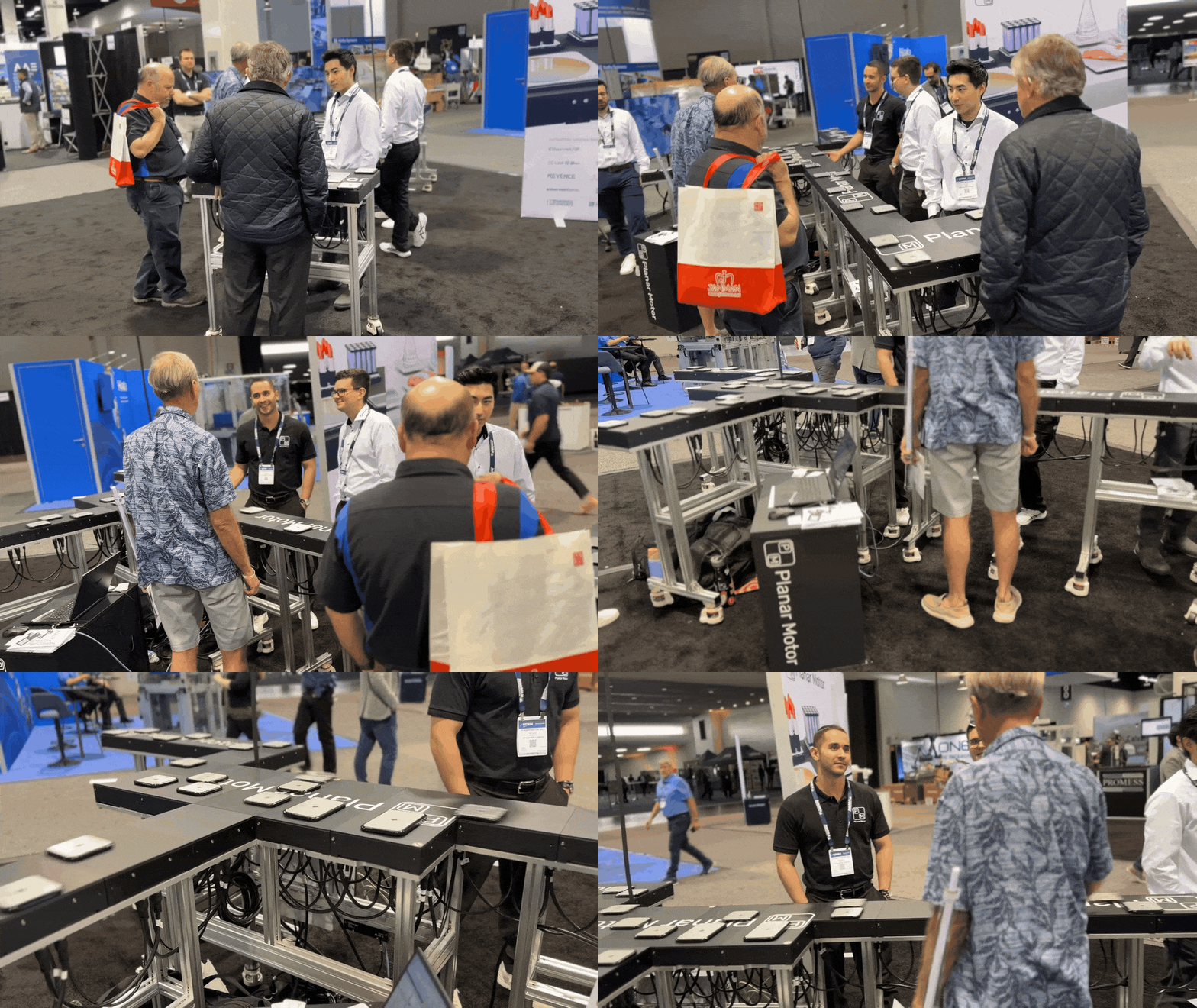
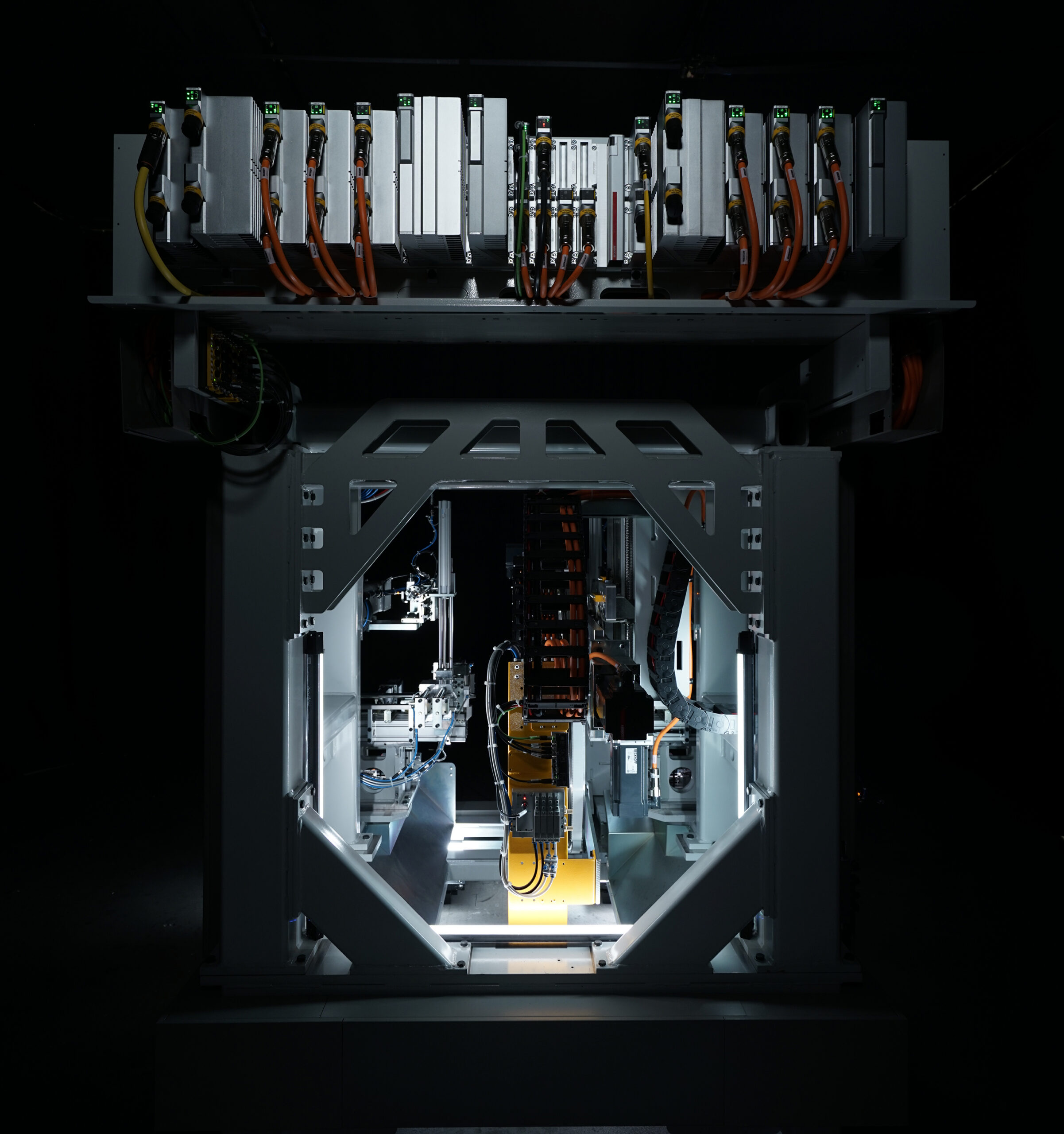
In fact, the extension of EtherCAT called EtherCAT G (for GbE) is needed for implementing extremely data-intensive machine vision and motion applications like the one shown here … especially as axes proliferate. These can involve several kilobytes of data over sub-millisecond cycles. Other communication systems can’t network such systems without elaborate decentralized control architectures. Shown here is a setup from Planar Motor — it uses EtherCAT for complex high-speed communications.
Network speed or bit rate is the bits through a wire per second — slightly different than (though often of the same value as) baud rate signal changes per second. So, at 1,000,000 or 1 Mbit per second, the bit is on the wire for 1 µsec. In contrast, latency is delay accumulated as data travels — for example as it goes from a main device to a subdevice and back. In fact, no frame can move continuously, and each node introduces a small delay. With industrial Ethernet protocols involving large stacks (say, one megabyte of code for Ethernet/IP or PROFINET) processing at nodes takes time which makes for delays in the milliseconds on top of the nominal cycle times.
Key network parameters: Speed and latency

In contrast, EtherCAT has a much leaner protocol stack — to 70 kilobytes of code and no stack at all for digital I/O (because subdevice ICs can integrate digital I/O for handling sans any software interaction). Every EtherCAT subdevice contains an ASIC to process its single datagram. 100 Mbit/sec is standard or 1 and even 10 Gbit/sec possible. The on-the-fly operation and this processing speed make for nearly nonexistent latency and optimal use of bandwidth. EtherCAT cycle periods can even be lengthened to stay within host computer update rates (if the limiting factor is IPC’s speed).
Industrial Ethernet bandwidth and throughput
Bandwidth (expressed as bits per second) is a network’s capacity to move data. That capacity is shared (divided amongst) all networked devices. In contrast, throughput is the actual amount of data a network link transfers … affected by the number of devices networked, the protocol, and various other events and factors.
Ethernet’s beefy 84-byte minimum frame size can make for inefficiency when it’s used to transport only a few bits or bytes at a time … say, for an I/O node or motor drive. To illustrate, a machine with a PLC commanding a dozen closed-loop axes consuming 75% of the bandwidth on a switched network might have a cycle time of several milliseconds for an I/O update rate of a couple dozen milliseconds — no matter the PLC’s capabilities.
But EtherCAT can support 100 axes with 100-µsec cycles (with bandwidth efficiency exceeding 90%) if the industrial PC’s processing power can compute that many axes’ control data at that speed.
Accommodating cyclic and acyclic communications
Cyclic communication provides deterministic timing for realtime control (relating to motor positions, actuator commands, and sensor readings) whereas acyclic communication is for non-timed information exchange. The latter carries device configuration, diagnostics, alarms, and firmware updates that don’t need to occur every control cycle.
EtherNet/IP typically carries cyclic I/O data using CIP implicit messaging over UDP to minimize latency. Acyclic data is exchanged using CIP explicit messaging over TCP, where reliable delivery is more important than deterministic timing. With PROFINET, cyclic process data rides the realtime (RT) channel using prioritized Ethernet frames that avoid normal TCP/IP processing for lower latency. Acyclic services use standard TCP/IP-based communication.
With EtherCAT, acyclic communication is via mailbox protocols such as Controller Area Network or CANopen over EtherCAT (CoE) and ADS over EtherCAT (AoE) for acyclic communication via the EAP with the MES.
Determinism, synchronization, and TSN
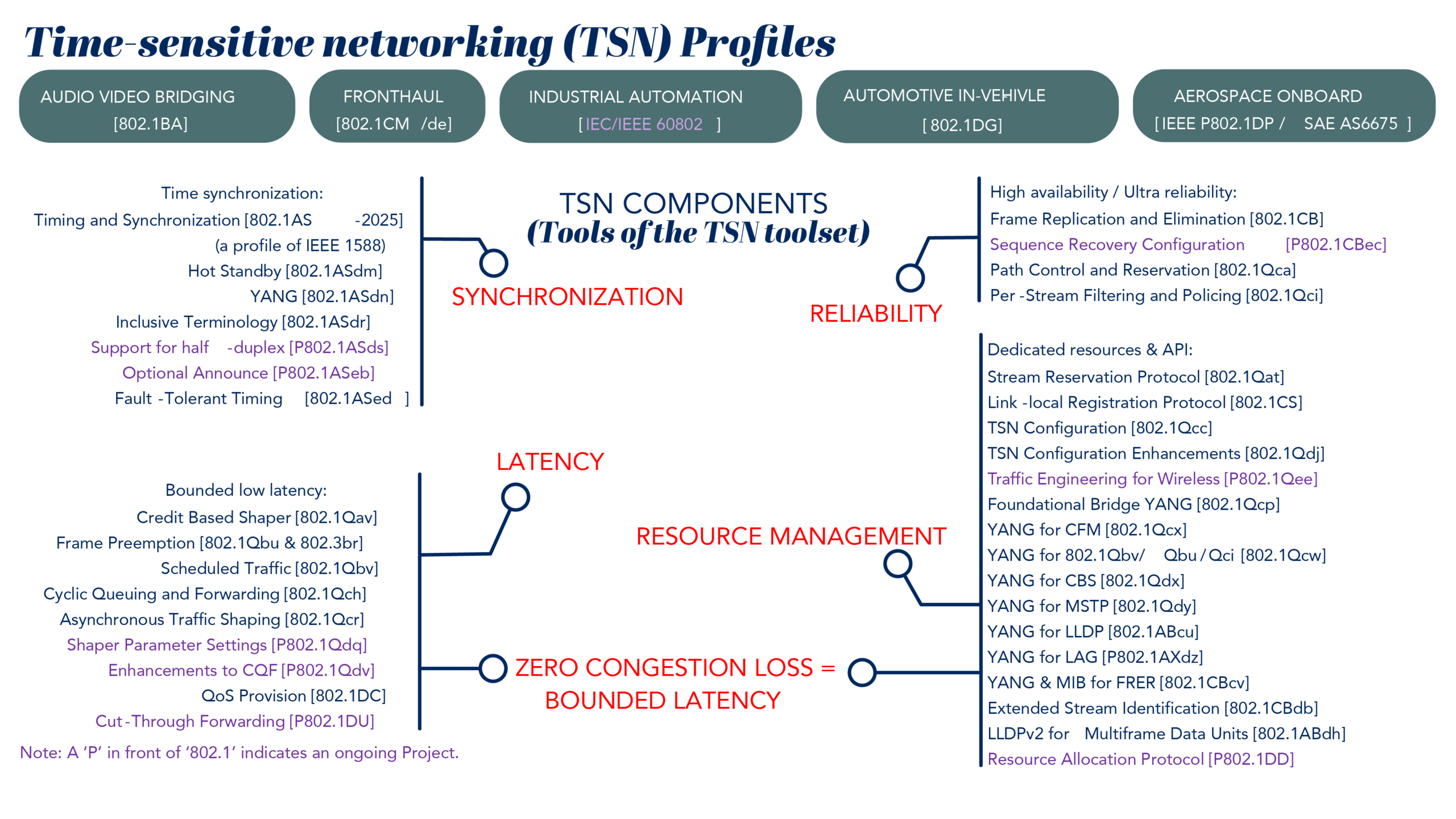
For synchronization, the IEEE 1588 Precision Time Protocol (PTP) dominates. PROFINET IRT and TSN both rely on it and the IEEE 802.1AS profile of PTP as the synchronization backbone of TSN specifically.
EtherCAT’s distributed clocks use a different approach for comparable or superior timing precision (to 20 nsec) by having each subdevice measure the propagation delay of a reference clock frame and correct its local clock accordingly so no external PTP grandmaster is needed. For this synchronization, EtherCAT allows for a couple different arrangements and correction modes. Jitter is vanishingly small.
Determinism is the guarantee that network messages will be delivered within a certain bounded time window — not merely fast on average. Realtime industrial communication must be deterministic plus deliver data fast enough to let the controller act on it within a needed timeframe — often microseconds for motion control or milliseconds for process control.
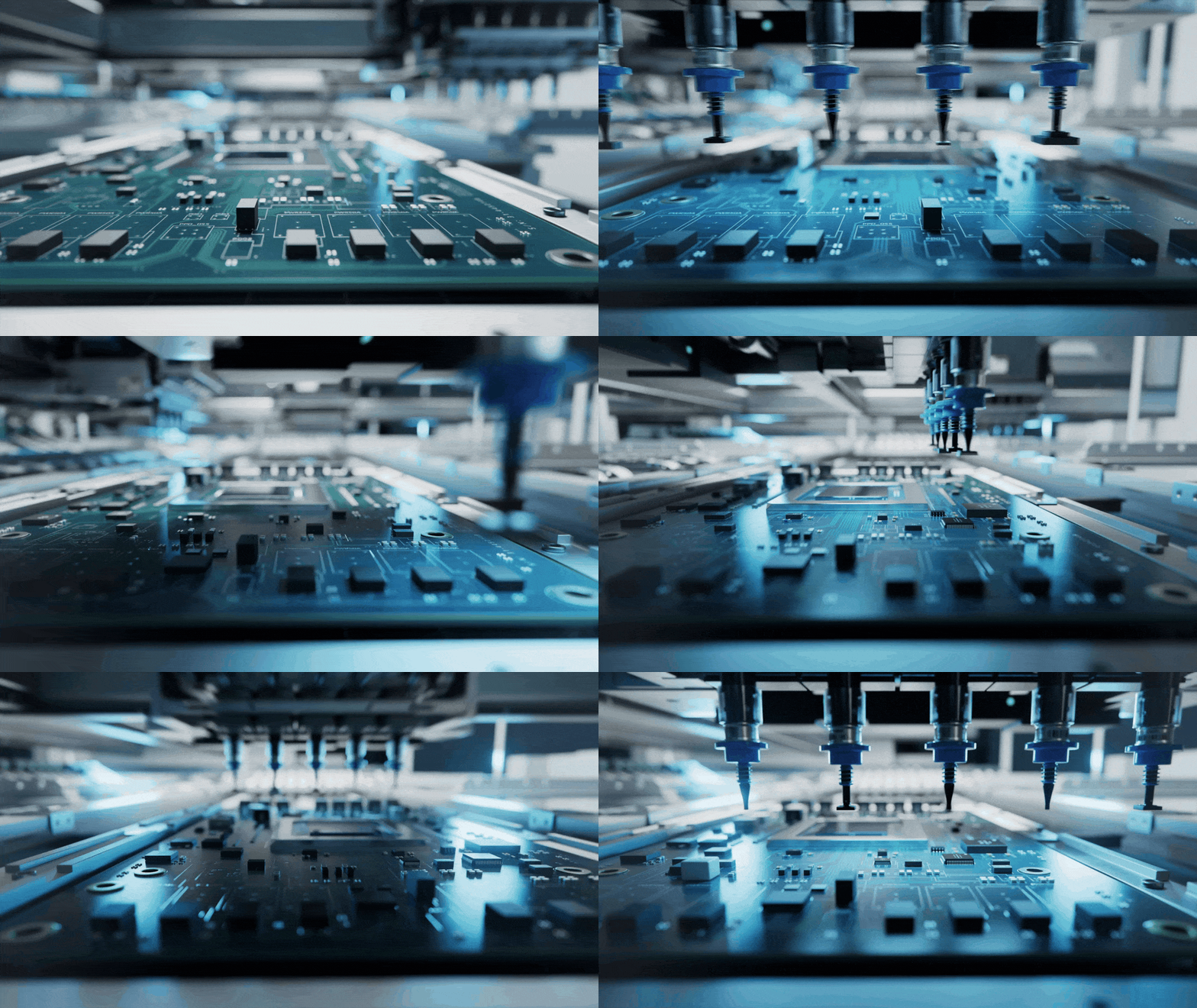
So, what of realtime versus time-sensitive networking or TSN?
In short, realtime is a requirement often delivered through a certain Ethernet stack. In contrast, TSN is one means to that end using the Layer 2 data-link layer to achieve deterministic communications. Visit our sister publication controleng.com and search “Thomas Burke” for more on this topic.
Realtime industrial networking protocols such as EtherCAT, PROFINET IRT, and EtherNet/IP with CIP Motion achieve determinism by modifying or controlling the Ethernet stack itself. EtherCAT does this through its on-the-fly processing and logical process image. PROFINET IRT does this through scheduled communication cycles managed by the controller.
TSN on the other hand is a set of IEEE 802.1 standards that adds determinism and time synchronization to standard Ethernet at the Layer 2 data-link layer so time-critical and other traffic can share the same hardware without the former being starved or delayed by the latter. In short, TSN brings determinism into standard Ethernet — not a proprietary realtime scheme layered on top — in an effort to converge IT and OT traffic on a single network. For more on this, visit motioncontroltips.com.
EtherCAT components (for communications and more)
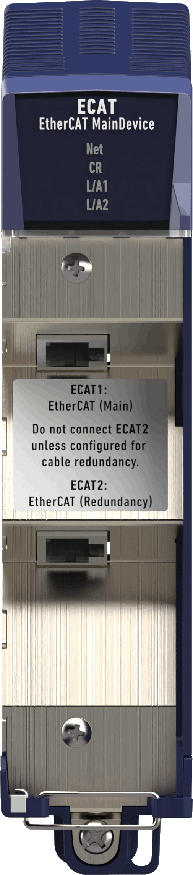
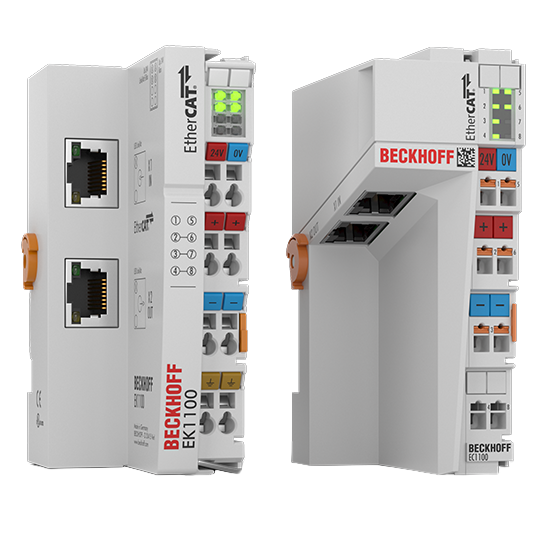
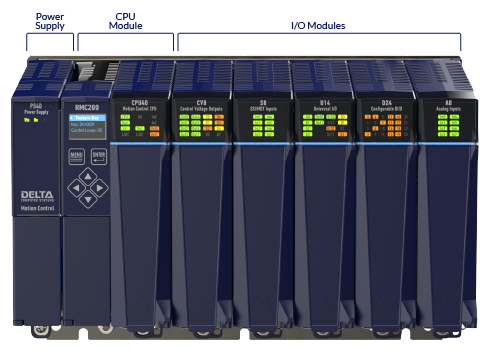
EtherCAT component formats (for communications and more) are proliferating and evolving. Some EtherCAT arrangements include EtherCAT-ready field devices connected via cables (sometimes via various terminals and modules which can be in a cabinet) to a main controller. In some cases, EtherCAT terminals and DIN-rail-mounted slice-style I/O blocks network conventional field devices by converting their analog or discrete signals into data carried by EtherCAT. Certain EtherCAT I/O modules serve the same interface function but plug into signal distribution boards (themselves connected to the EtherCAT network and main through a coupler) for decentralized setups. Taking this one step further are more options than ever for distributed and even cabinet-free installations. The ruggedized components for such modular machine designs include mechanical and electrical features as well as communication connections that aim to simplify wiring and any future upgrades.

Leave a Reply
You must be logged in to post a comment.