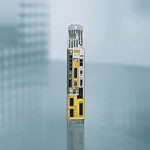
A system on a chip is an integrated circuit that contains all the components of a computer. That is everything from processors, memory and power regulation to external inputs such as USB. For stepper drives, this means one chip combines all the stepper components that are traditionally separate parts. More specifically, the drive, indexer, computer, […]
Stepper Motors
FAQ: How do engineers typically integrate stepper drives?
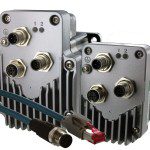
Engineers can implement stepper motor drives in numerous ways. Companies often produce pre-packaged drives that can run with a variety of microprocessors and motors. This means that that drive is prefabricated and the engineer has many decisions on where and how to use it. Beyond this, some companies even offer complete off-the-shelf boards. These combine […]
FAQ: What are stepper drives and how do they work?
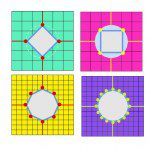
A stepper drive is the driver circuit that controls how the stepper motor operates. Stepper drives work by sending current through various phases in pulses to the stepper motor. There are four types: wave drives (also called one-phase-on drives), two-phase on, one-two phase-on drives and microstepping drives. Wave or one-phase-on drives work with only one […]
QuickSilver’s Mosolver line now in NEMA 17 frame

QuickSilver Controls, Inc., has extended their patented Mosolver (Motor + Resolver) technology into the compact NEMA 17 frame format. The Mosolver sensor provides 32,000 counts of position information using a compact polyamide sensor coil placed within the stator opposite the rotor. The sensor is protected by the motor structure and does not need a separate […]
FAQ: What is pullout torque and why is it a critical stepper motor value?
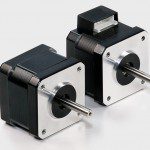
Stepper motor pullout torque is the highest torque a stepper motor can output at a given speed without losing steps. Manufacturers find a stepper motor’s pullout torque by accelerating the motor up to the target speed and then increasing the torque load until the motor starts missing steps or stalling. Performing this test operation over […]
FAQ: How do stepper motors handle inertia mismatch?
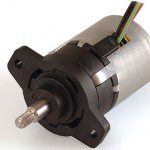
Inertia mismatch is the difference between the inertia of the system and inertia of the stepper motor. A large inertia mismatch is usually best avoided for machines run by stepper motors. One, the stepper motor itself has inertia it must overcome, in addition to the inertia of the system it drives. Two, friction further affects […]
FAQ: What are hybrid stepper motors?
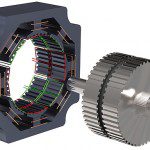
Hybrid stepper motors combine aspects of both permanent magnet (PM) and variable reluctance (VR) stepper motors. Like PM motors, they contain a permanent magnet in the rotor teeth. Two sets of teeth called cups ring the rotor. One ring is all south poles, and the other ring is all north poles. Like VR motors, hybrid […]
FAQ: Aren’t heat and noise some common stepper motor problems?
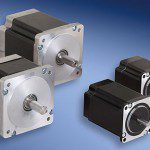
Heat and noise both depend on the type of stepper motor, the conditions in which it operates, and what functions the motor serves in the application. Permanent-magnet stepper motors are usually most quiet, as they have a smooth rotor. Hybrid stepper motors are quiet as well. In contrast, variable-reluctance stepper motors are the noisiest type […]
FAQ: What is pole count and why does it matter?
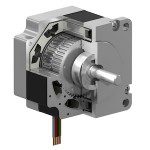
Simply defined, a pole is a north or south magnetic field of force that is generated by a permanent magnet or current passing through a coil of wire. For stepper motors, however, this definition does not necessarily translate to a simple definition of pole count. Different manufacturers use different names to refer to their poles […]
The hybrid servomotor: stepping up to closed loop
by Don Labriola P.E., President, QuickSilver Controls, Inc The use of hybrid servos grows as their control techniques are understood, and the costs of sufficient processing power shrink. Sophisticated control techniques have produced the hybrid servomotor system from the motor style commonly called a hybrid stepper motor when powered by an open-loop step driver. The […]