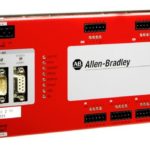
All PLCs (programmable logic controllers) do essentially the same thing; control some machine process. Typical PLC functions include timing, control, and sequencing of such actions as turning motors, pumps or valves on or off. A safety PLC, on the other hand, is a dedicated controller specifically built and certified to meet safety requirements, such as […]
PLCs + PACs
FAQ: Is a PLC fast enough to meet my application’s requirements?
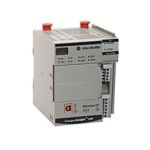
Knowing if your PLC is fast enough and can handle your application is really a two-part process. That is, it can be looked at from two different but intertwined perspectives; one is from the PLC perspective and the other is from the application level. The most important factors are knowing the specifics of the application […]
FAQ: What are some PLC I/O, visual display, and networking options?
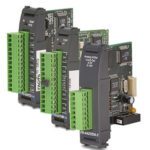
A PLC can be a highly customizable controller, depending on application needs. And with advances in technology, the options designers have continue to expand. Specifically, we focus here on three types of options; I/O (input/output), visual displays, and networking. I/O I/O options can be classified in several ways, including some basic groupings such as analog […]
Select the right machine controller for your application

by Don Pham, Product Manager, IDEC Picking the right type of machine controller will minimize costs and complexity, while still providing the performance required for the application. Many different controller options are available for machine automation, giving you the opportunity to select a controller closely matched to the application. All those choices can cause confusion. […]
FAQ: Are PACs just for process control or do they work for discrete plant functions?

By Steve Meyer || Programmable automation controllers (PACs) are (by design) a superset of PLCs. Everything that a PLC can do, a PAC can do. Some control tasks done by PACs are possible to do with a PLC but require expensive add-on modules. Conversely, the reliability and ruggedness so common in the physical builds of PLCs is […]
FAQ: How do programmable automation controllers (PACs) handle analog I/O and related controls?

By Steve Meyer || Analog inputs and outputs are generally associated with sensors. These in turn are the key to controlling real-world processes. So depending on the speed and resolution needed to measure events being controlled, analog inputs come in many performance ranges. Common sampling resolutions are 12 to 24 bit, and sampling frequencies range from kilohertz to […]
FAQ: What are programmable multi-axis controllers?
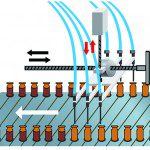
Multi-axis controllers are controls for which the entire hardware and software structure is organized around managing complex motion. Given the compute capability of today’s PC processors, any recent generation PAC or PC based controller can handle multi-axis motion control. However, each platform can address the problem in different ways. It’s common to have many independent […]
FAQ: What is the difference between PLCs and programmable controllers (PACs)?
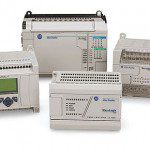
By Steve Meyer || All programmable controllers (PACs) are capable of performing as PLCs but strictly speaking, PLCs can’t work as PACs. That’s because PACs are a superset of PLC-type controls that work when a design needs: • Multiple channels of communication • High data traffic • Coordination with intelligent subsystems Most high-performance PLCs can host intelligent processors […]
Leading the trend toward integration in 2016: Motion controllers

Motion controllers are more integrated and programmable than ever, thanks to increasing capabilities on both ASICs and FPGAs to process inputs and outputs for motion control. Some electronics even let end users customize feedback for closed-loop control. Industries spurring controller innovation for all hardware types are packaging, paper and pump processing, and medical. The former demands […]
New lower cost 7-in. UniStream™ HMI panel from Unitronics

Unitronics recently launched the fourth model of the UniStream product line – lower cost UniStream 7-in. panel. This model was designed specifically to improve the price competitiveness of the current UniStream 7-in. panel in the market. The differences between the current 7-in. panel and the new model are minor, and the unit is completely backwards […]