
Most Industrial Ethernet networks can provide hard real-time communication for multi-axis, synchronized motion control. But each one uses its own methods for time synchronization and data transmission to guarantee cycle times, latency, and jitter, making these networks incompatible with one another. Time-sensitive networking (TSN) sets out to solve the network compatibility problem by providing standard […]
What’s the difference between torque mode and velocity mode in servo control?
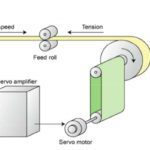
Servo systems are used when the application calls for precise control of position, velocity, or torque — or a combination of the three. Depending on the parameter being controlled, the servo system can be operated in torque mode, velocity mode, or position mode. Each mode requires control loops that allow the servo drive and controller […]
What is direct torque control (DTC) for AC induction motors?
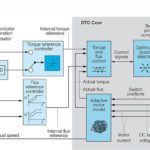
Variable frequency drives control AC induction motors through one of several control schemes. Scalar control (also referred to as V/Hz or V/f control) varies both the voltage and frequency of power supplied to the motor to maintain a fixed ratio between the two. This keeps the strength of the magnetic field at a constant level […]
What is isochronous real-time (IRT) data exchange?
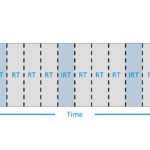
Real-time industrial communication protocols are those in which data exchange takes place within a specified amount of time — typically less than 10 ms. But “real-time” systems can be “soft” real-time or “hard” real-time, depending on how rigidly deadlines are enforced. In a soft real-time system, occasional violations of the cycle time, or deadline, for a […]
What are explicit and implicit messaging in EtherNet/IP?

EtherNet/IP, which is the implementation of the Common Industrial Protocol (CIP) over standard Ethernet, uses two types of messaging between devices: explicit messaging for data that is purely informational, and implicit messaging for time-critical data. All four industrial networks that use CIP at the application layer — EtherNet/IP, DeviceNet, ControlNet, and CompoNet — support explicit […]
What is the Common Industrial Protocol (CIP)?

In a recent post, we explained the seven layers of the OSI (Open Systems Interconnection) protocol, including the top, or application, layer, which manages the interaction between programs or applications and the network. One example of a specialized application layer is the Common Industrial Protocol. Also referred to as CIP, the Common Industrial Protocol was […]
What is the application layer in an industrial network?
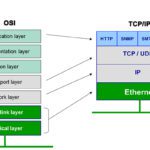
Think of all the tasks that take place behind the scenes when you interact with a program or application — such as an internet browser or email client — on a computer network. For example, the data being exchanged must be disassembled into packets, which are then transmitted across the network and reassembled at the […]
What are rotate and transfer modules for conveyors?

Pallet conveyors — conveyors that move products on individual carriers, or pallets — offer significant flexibility for assembly, automation, and inspection processes, with the ability to move products asynchronously in virtually any configuration imaginable, including curves, turns, and small elevation changes. And beyond these basic movements, special modules for pallet conveyors can transfer products horizontally […]
AS-Interface: What is it and when is it used?
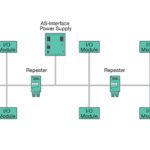
Sensors and actuators have traditionally been connected to PLCs or other controllers via discrete wires and cable harnesses. But the introduction of actuator-sensor interface, also known as AS-Interface, or AS-I, in the 1990’s offered users and integrators a reliable, cost-effective replacement for the bulky, time-consuming method of parallel wiring. A new version of actuator-sensor interface, […]
Types of industrial springs: compression, extension, and torsion
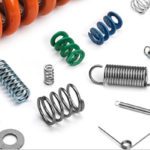
Typically mounted deep inside an assembly of moving parts, industrial springs often go unnoticed, despite their importance to motion control and industrial equipment. In fact, they’re found in everything from door closing mechanisms on machine tools to mechanical seals in rotary unions. While springs are readily available in custom designs and variations, there are three primary types […]