
Most of us are familiar with the software as a service (SaaS) business model, in which users pay a fee to access software over the internet, without requiring an application or download to a local machine. The software as a service model made complex software, such as CRM (customer relationship management) systems, more accessible to […]
FAQs + basics
What are digital twins and how are they used in industrial manufacturing?
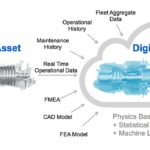
Manufacturing even the simplest product requires expertise in materials, equipment, operations, and process flow. And the interdependencies of these elements make it extremely difficult — if not impossible — to “get it right the first time” when setting up a new manufacturing line or modifying an existing process. Every element, from the product design to the […]
How to calculate retaining ring maximum speed (rpm), and when it matters
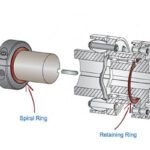
Selecting an appropriate retaining ring for an application typically involves evaluating factors such as installation stress, the radial load exerted by the ring, and the thrust capacity of the ring. And because the groove that holds the ring is integral to the ring’s performance, groove deformation needs to be considered as well. But when an external […]
What are latency and jitter and why are they important to industrial networks?
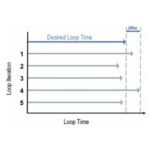
Applications that use closed-loop control often require communication networks that provide deterministic, real-time control of data transmission. This means the network guarantees that a message will be transmitted, or an event will be responded to, in a specified, predictable period of time — not faster or slower (deterministic) — and that the message will be transmitted […]
When is motor output power a useful specification and how is it calculated?
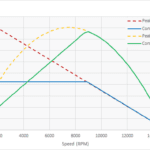
In motion applications, motors are typically chosen based on their torque and speed capabilities, using a torque-speed curve that describes the motor’s performance when paired with a specific type of drive and operated under specific conditions. But motors can also be rated, or specified, by their output power. Here, we’ll look at how output power […]
Motion system design: How to manage inertia mismatch
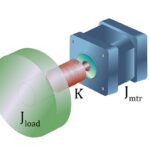
One of the most important parameters when sizing a motion system is the inertia of the load being moved. Regardless of the type of motor being used — AC induction, stepper, brushless DC, or AC servo — the ratio of the load inertia to the motor inertia has an important influence on system performance. If the […]
What does embedded mean in the context of motion control?
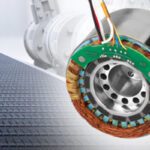
Over the past several years, embedded solutions have found their way into the motion control space, with terms such as embedded motion, embedded motion control, and embedded motion controller commonly used in product descriptions and technical articles. Although there are no standard definitions for these terms, they all refer to some level of integration of […]
Why do stepper motors vibrate and what are ways to avoid or dampen vibrations?
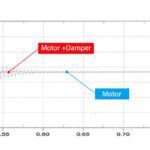
With each discrete step that a stepper motor makes, the inertia of the system causes the motor to slightly overshoot (or undershoot) the intended step angle. The motor then oscillates, or “rings,” until it finally settles at the commanded position. If the frequency of these step-by-step oscillations is at or near the motor’s natural frequency, […]
When is the application of overvoltage safe (and common) for stepper motors?
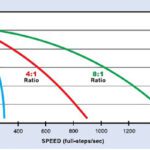
For most types of motors, operating with a supply voltage that is higher than the rated voltage — referred to as overvoltage — can cause an increase in current, and heat, high enough to damage the coils and other motor components. But in some cases, a stepper motor can be operated at a voltage higher than rated […]
Which types of DC motors can be used as servo motors? (And a refresher on DC motor technologies)
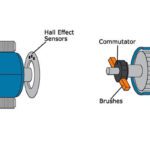
Servo motors are used in applications where precise control of position, speed, or torque is required. But many different types of motors can be considered servo motors — the defining feature of a servo motor is that it incorporates or reads feedback in a closed-loop system. In fact, although many servo applications use synchronous AC motors, […]