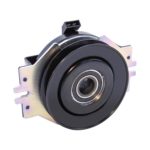
Ogura has developed a new model, GT2.75, clutch brake for the outdoor power equipment market. This new clutch brake is patented both in and outside of the United States and offers engineers advantages in both design and cost over older designs currently on the market. The clutch incorporates a six hard rivet design in the […]
Mechanical PT
High-torque synchronous belt for industrial applications

Gates has introduced the PowerGrip GT4 belt, a newly designed ethylene elastomer (EE) high-torque synchronous belt for industrial markets. The PowerGrip GT4 reflects Gates’ dedication to innovation in materials science and process engineering.Many of the elastomer synchronous belts in the market today are made using chloroprene, a material that has performance limitations. The new Gates PowerGrip […]
New flexible coupling from SDP/SI features vibration damping technology
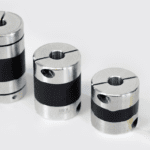
Stock Drive Products/Sterling Instrument (SDP/SI) has debuted several new series of high-gain couplings. These Antivibration Flexible Couplings are designed for use with high gain servomotors. When a servomotor drives a mechanism, as in applications such as semiconductor manufacturing equipment, blood analyzers or high-speed printers, a change in direction causes a phenomenon called hunting. Hunting is […]
New RH-N gearbox kits from Nabtesco Motion Control are pre-engineered offering
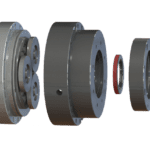
Nabtesco Motion Control now offers pre-engineered RH-N gearbox kits. RH-N kits use the manufacturer’s newest RV-N series of gearboxes … to 20% smaller and 30% lighter than the original RV-E series. RH-N gearbox kits make for turnkey motion solutions that trim lead, engineering, and installation times. The RH-N directly bolts onto servomotors without the need […]
FAQ: What are mechanical, fluid-power, and elastomeric material dampers?
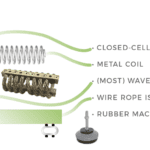
Vibration in industrial machinery often originates from imbalances inherent to motors, gearboxes, and other turning component that excites natural frequencies. Dampers in this context are components that counteract and often isolate the vibration source from the rest of the design or machine — to prevent its propagation of mechanical oscillation. Watch the recent video on […]
Zero backlash featured in Miki Pulley CSZ electromagnetic clutches
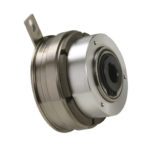
Miki Pulley’s CSZ electromagnetic clutches have a zero backlash design and provide an efficient connection between a motor and a load with low inertia, minimal drag and zero backlash. CSZ clutches function using the magnetic force generated by the energized coil providing engagement of input and output members of the clutch. They feature an integrated […]
Why is viscosity important for bearing lubrication?
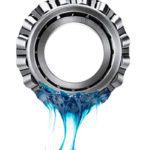
Lubrication — or, more correctly, improper or insufficient lubrication — is one of the leading causes of equipment failures in industrial applications. Without it, sliding, rolling, or meshing surfaces experience significant friction, heat, and wear, leading to increased noise, loss of accuracy, and reduced equipment life. One of the most important characteristics of a lubricant […]
New Spirawave nested wave spring series from Smalley

Smalley now offers a new nested Spirawave wave spring series. Smalley has been producing nested wave springs as customs for over 30 years, but this will mark the first standard series on the market. These multiple turn, flat wire wave springs are coiled in parallel to produce two to three times as much force as […]
Laser marking now part of Gear Motions production

Gear Motions now has a fiber laser marking machine which was recently installed at its Nixon Gear Division in Syracuse. The Beamer Laser Systems Model FL53 uses a 50-watt high powered LED laser to mark products quickly and safely. The machine offers fast cycle times and a wide range of marking intensities. It has a […]
Why is static friction greater than kinetic friction?
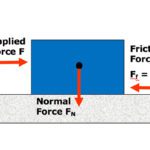
Solid surfaces are subjected to two types of friction: static friction and kinetic friction. Static friction acts when the surfaces are stationary — think of a box on the floor. Static friction is what keeps the box from moving without being pushed, and it must be overcome with a sufficient opposing force before the box […]