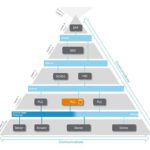
In manufacturing processes and plants, multiple Industrial Ethernet protocols — such as EtherNet/IP, PROFINET, or EtherCAT — are used across different networks to meet specific topology requirements, communication speeds, or latency guarantees. And although these communication protocols are open, they’re often incompatible, resulting in fragmented networks that can’t “speak” to each other. OPC UA (Open […]
FAQs + basics
What is time-sensitive networking (TSN)?
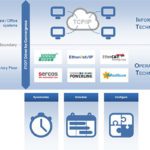
Most Industrial Ethernet networks can provide hard real-time communication for multi-axis, synchronized motion control. But each one uses its own methods for time synchronization and data transmission to guarantee cycle times, latency, and jitter, making these networks incompatible with one another. Time-sensitive networking (TSN) sets out to solve the network compatibility problem by providing standard […]
What’s the difference between torque mode and velocity mode in servo control?
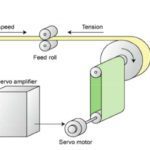
Servo systems are used when the application calls for precise control of position, velocity, or torque — or a combination of the three. Depending on the parameter being controlled, the servo system can be operated in torque mode, velocity mode, or position mode. Each mode requires control loops that allow the servo drive and controller […]
What is direct torque control (DTC) for AC induction motors?
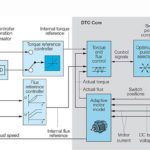
Variable frequency drives control AC induction motors through one of several control schemes. Scalar control (also referred to as V/Hz or V/f control) varies both the voltage and frequency of power supplied to the motor to maintain a fixed ratio between the two. This keeps the strength of the magnetic field at a constant level […]
What is isochronous real-time (IRT) data exchange?
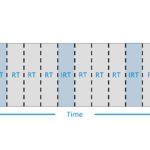
Real-time industrial communication protocols are those in which data exchange takes place within a specified amount of time — typically less than 10 ms. But “real-time” systems can be “soft” real-time or “hard” real-time, depending on how rigidly deadlines are enforced. In a soft real-time system, occasional violations of the cycle time, or deadline, for a […]
What are explicit and implicit messaging in EtherNet/IP?
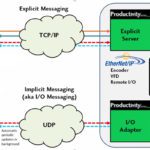
EtherNet/IP, which is the implementation of the Common Industrial Protocol (CIP) over standard Ethernet, uses two types of messaging between devices: explicit messaging for data that is purely informational, and implicit messaging for time-critical data. All four industrial networks that use CIP at the application layer — EtherNet/IP, DeviceNet, ControlNet, and CompoNet — support explicit […]
What is the Common Industrial Protocol (CIP)?
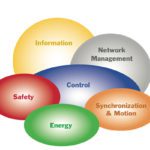
In a recent post, we explained the seven layers of the OSI (Open Systems Interconnection) protocol, including the top, or application, layer, which manages the interaction between programs or applications and the network. One example of a specialized application layer is the Common Industrial Protocol. Also referred to as CIP, the Common Industrial Protocol was […]
What is the application layer in an industrial network?
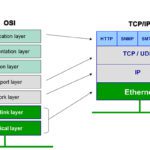
Think of all the tasks that take place behind the scenes when you interact with a program or application — such as an internet browser or email client — on a computer network. For example, the data being exchanged must be disassembled into packets, which are then transmitted across the network and reassembled at the […]
Motion-industry educational efforts abound for students and engineers

Motion-component suppliers surveyed for this year’s Design World Trends issue described several different programs to maintain technical proficiency for both application engineers and OEMs and other users of their products. CGI Motion engages in outreach in the form of open houses so that STEM students get chances to tour the company facility. That’s from Robert […]
What are rotate and transfer modules for conveyors?

Pallet conveyors — conveyors that move products on individual carriers, or pallets — offer significant flexibility for assembly, automation, and inspection processes, with the ability to move products asynchronously in virtually any configuration imaginable, including curves, turns, and small elevation changes. And beyond these basic movements, special modules for pallet conveyors can transfer products horizontally […]