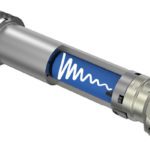
On a typical machine tool, the tool that performs the machining operation (cutting, milling, or boring, for example) is attached to a rotating spindle that drives the tool. But on machines that require long machining lengths, such as milling and boring, the tool is mounted to an arbor. The arbor is driven by the spindle […]
FAQs + basics
What are strain energy and resilience in the context of compression (wave) springs?
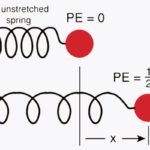
When a compressive or tensile load is applied to a spring (or any elastic material), the load does work on the spring, causing the spring to undergo a change in shape (extension or compression). This change in shape creates a type of potential energy — referred to as strain energy — in the material. Typical […]
Timing belt conveyors: benefits and uses
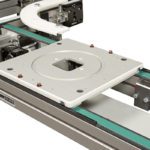
Industrial conveyors span a wide range of designs and configurations to suit specific purposes — from positioning delicate optical components for inspection to delivering automotive parts through an assembly line. When designing a conveyor, one of the first considerations is the conveying media to be used, which depends on the size, shape, and weight of the […]
Motion system design: Can a servo-driven machine be too stiff?
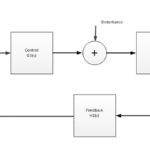
When we think of stiffness, we often think of mechanical stiffness — the ability of a part or system to resist deflection. But in servo-driven motion systems, stiffness can also refer to how the system is tuned — that is, how the gains in the servo controller are set and, correspondingly, how the motor responds […]
How to avoid wave spring fatigue in dynamic applications
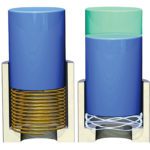
Wave springs are gaining acceptance in motion applications, thanks to their ability to provide similar force and deflection characteristics to traditional coil springs, but with significantly reduced working height. Although wave springs can be used in static applications — such as preloading a bearing or mechanical seal — many applications require dynamic movement — for example, […]
What are some common wave spring material and finish options?
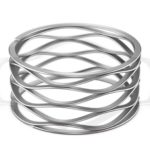
There are four key criteria for sizing and selecting a wave spring: load, working height, physical design requirements (bore diameter, ID, OD), and material. In many cases, manufacturers supply custom wave springs in “exotic” materials or with special finishes to meet unique application demands, including difficult environments or corrosion resistance. And in some cases, appearance also […]
What does integrated safety in motion control mean?
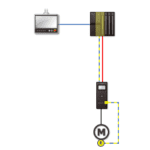
Safety is a critical machine design criteria. For example, the most common functional safety standards for machines in automation are EN/IEC 62061 and EN/ISO 13849-1. Both deal with safety via electronic solutions. This is in contrast to traditional safety systems that used electromechanical components for safety functions. Functional safety is generally understood to apply to […]
How are industrial shock absorbers different from other damping systems?
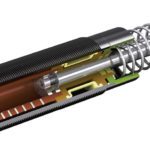
Shock loads are common in industrial equipment — both as a normal result of the application and as unforeseen loads that occur when there’s a variance in the operation or process. Whether incorporated into the initial design or added after implementation, industrial shock absorbers are often the best choice for mitigating the forces that result […]
How do cycloidal gears work and where are they used?
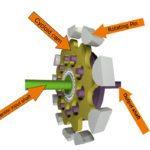
One way to classify gears is by the profile of the gear teeth: involute, cycloidal, or trochoidal. (Note that trochoidal gears are used primarily in pumps.) The majority of gears used in motion control applications — including spur, helical, and bevel designs — are involute gears. However, cycloidal gears are a good choice for motion control […]
Pedal electric cycles (pedelecs) employ FAULHABER electric motors

In many parts of the world, bicycles are central to the culture — both for recreation and practical transportation for everyday tasks such as shopping or commuting to and from work. Efforts to reduce CO2 emissions, concerns about climate change, and rising fossil-fuel costs in many areas (along with congested roadways) have only spurred more […]