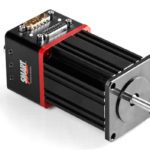
The class of motors known as “smart” motors continue to see a steady increase in use in many industrial applications. A smart motor is essentially a motor that integrates a number of other components together into one physical unit. Common configurations include a motor and drive, but can also consist of integrated encoders and controllers […]
FAQs + basics
What is hunting in the context of motion control and how is it addressed?
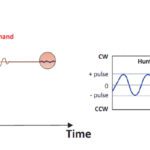
When a linear or rotary axis must follow a predefined move profile to reach or maintain a precise position, speed, or torque, a closed-loop servo system is often the best choice. Feedback from an encoder — mounted on the motor or directly on the axis — provides information regarding the system’s actual state (position, speed, […]
What is safe motion monitoring?
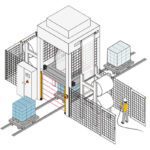
Machines and equipment placed on the European market must conform with essential health and safety requirements of the Machinery Directive. The Directive specifies that manufacturers of machines and equipment must conduct a risk assessment and implement measures to eliminate or reduce hazards that pose a risk to people, equipment, product, or the environment. These hazards […]
What are IIoT sensors for motion systems?
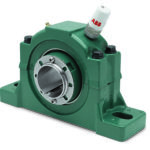
Sensors have always been a part of industrial automation and motion control systems. However, as the industrial IoT (IIoT) continues to make inroads into real-world applications, the spotlight shifts to the sensors used and the critical role they play in bettering performance. These sensors are the vital link between the physical system itself, collecting data […]
What is the Machinery Directive and how does it relate to motion system safety?

Machines and equipment placed on the EU market must be CE-marked, indicating conformity with the essential safety and health requirements of the Machinery Directive. The Machinery Directive 2006/42/EC is a set of legal requirements for manufacturers and distributors of machines in or to the EU market that ensures the safety of operators, maintenance personnel, equipment, and […]
What are OSCAT files and how do they relate to CODESYS?

The IEC 61131-3 standard provides a vendor-independent, standardized programming interface for PLCs and automation controllers by defining five programming languages, along with rules for syntax and semantics. Using the languages and structure set out in IEC 61131-3, programmers and developers can more easily and efficiently define and build control software specific to their markets or applications. […]
Environmental effects on motion components in robots
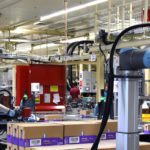
Here we outline leading factors affecting the longevity and performance of industrial robot joints. Links refer to supporting research listed at the feature conclusion. Recent years have seen continuous demand in numerous industries — automotive manufacturing to computer, communication, and consumer electronics (3C) product fabrication — for industrial robots. Compared to automated dedicated equipment in […]
What does software for motion controllers look like?
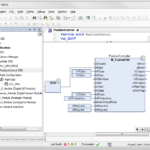
Software for motion controllers can mean a few different things, so it helps to clear up exactly what is meant by the phrase. For one thing, it can refer to the programming of motion controllers; that is, telling the controller what exactly to do in a system. It can also refer to other aspects including […]
What are program organization units (POUs) in PLC programming?
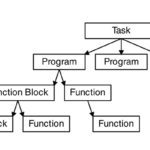
The software model for PLCs, as defined in the IEC 61131-3 standard, Programmable Controllers – Part 3: Programming Languages, consists of, at the top level, a configuration. The configuration defines the hardware structure and logic of the PLC system and contains resources (the PLC or PAC, for example), which are able to execute programs. These […]
What do Lissajous figures tell us about encoder output?
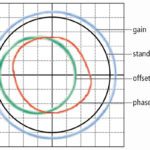
As an encoder detects a change in magnetism (for magnetic encoders) or light (for optical encoders), it produces two analog sinusoidal voltages, phase-shifted by 90 degrees. These analog signals are interpolated (divided into smaller increments by the encoder electronics) to increase the encoder’s resolution and then converted to digital output signals. If there are errors in the […]