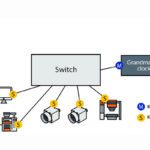
Motion control systems operating over Ethernet networks, such as EtherNet/IP, typically involve time-based operations, and if the devices on the network, such as motion controllers, I/O devices, and actuators, are not operating with synchronized clocks, these operations will fail. The IEEE 1588 standard was developed to provide a method for ensuring a reliable, consistent time reference […]
FAQs + basics
Why is the instruction list (IL) language for PLCs falling out of favor?

The international standard IEC 61131-3 specifies programming languages for programmable controllers (aka programmable logic controllers, or PLCs), including ladder diagram (LD), structured text (ST), function block (FB), instruction list (IL), and sequential function chart (SFC). Of these, instruction list and structured text are considered textual languages, meaning they use text, numbers, and punctuation — like […]
What are jackscrews?
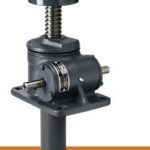
Jackscrews (also referred to as jack screws or screw jacks) are among several different kinds of linear motion actuators most often used for lifting or moving loads. They can also be used in any application needing linear motion, or where pushing or pulling along a linear axis is needed. Other common mechanical actuators include lead, […]
Deterministic, real-time control: What does it really mean in motion control applications?
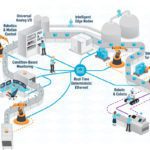
Two terms are often used to describe the type of control that can be achieved with Industrial Ethernet networks: deterministic and real-time. Although sometimes used interchangeably, the terms deterministic and real-time refer to different, but related, characteristics of a network’s ability to transmit data or respond to events. Industrial Ethernet networks, such as EtherNet/IP, EtherCat, […]
EtherNet/IP versus EtherCAT: What’s the difference?

A recent report by HMS shows that Industrial Ethernet now makes up 59% of the global industrial network market. Here, we look at two of the most prominent Industrial Ethernet networks — EtherNet/IP and EtherCAT — and compare the strengths of each for multi-axis applications. EtherNet/IP According to the Open DeviceNet Vendors Association, EtherNet/IP is […]
What is Industrial Ethernet and how does it differ from standard Ethernet?
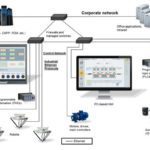
You’re probably familiar with Ethernet — the networking protocol that allows computers (typically in office, school, or commercial environments) to share files, browse the internet, and access printers and other hardware connected to the network. Ethernet was developed for high-speed data transmission and is efficient, simple, and flexible. And, it’s arguably the most widely-adopted networking protocol […]
What’s the purpose of an IoT gateway on automated machinery?
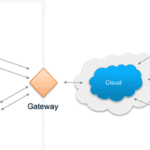
Two concepts are perpetually at the forefront of discussions regarding the Internet of Things (IoT) or, in this context, the Industrial Internet of Things (IIoT): connectivity and communication. Connecting hundreds or thousands of devices and having them communicate with each other, with higher-level systems, and with the cloud would be an impossible task without an […]
What’s there to know about terminal blocks for control applications?

What’s a component that forms the backbone of most motion or automation control systems but that often times goes unacknowledged? We’re talking, of course, about the hard-working terminal block. What exactly is a terminal block and what function does it serve in motion/automation systems? The most basic definition is that it provides an electrical connection […]
What is IO-Link and how is it used in motion control applications?
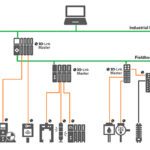
Industry 4.0 and the Industrial Internet of Things (IIoT) offer significant benefits to automation and processing plants, through improved machine-to-machine communication, faster and more comprehensive data collection and sharing, and improved predictive maintenance. One of the key enablers of these smart factories is a communication protocol known as IO-Link — an open standard, point-to-point communication […]
Why use a gearbox with a stepper motor?
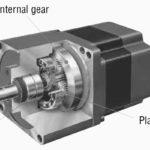
Stepper motors are known for their accurate positioning capabilities and high torque delivery at low speeds, but they require careful sizing to ensure the motor matches the load and application parameters, to minimize the possibility of lost steps or motor stalling. Adding a gearbox to a stepper motor system can improve the motor’s performance by […]