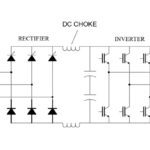
In a recent post, we looked at motor chokes — inductive devices installed between a drive and motor — and why they’re used in servo systems and variable frequency drives. But in variable frequency drives (VFDs), inductors can also be placed after the drive’s input diodes, between the input rectifier and the DC bus link. […]
FAQs + basics
What is a motor choke and why is it used?
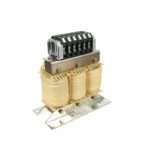
A choke is a passive device that adds inductance to a circuit. Inductance is a property of a coil of wire that resists any change to the current flowing through it. (Straight wires also possess a small amount of inductance.) In other words, if current through the coil increases, the magnetic field of the coil […]
What is a constant voltage drive for a stepper motor and when is it used?
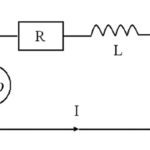
There are two fundamental types of stepper motor drives: constant voltage drives, which supply a fixed voltage to the motor, and constant current drives, which manipulate voltage to ensure that a constant current is delivered to the motor. Stepper motor electrical basics The most fundamental equation governing the behavior of a stepper motor is Ohm’s law, […]
What is a sine encoder (aka sine-cosine encoder)?
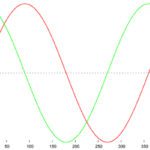
A sine encoder is similar to an incremental encoder in design and function. Both devices measure either rotary or linear position changes and direction, and both are available with either optical or magnetic sensing technology. The primary difference between the two is that sine encoders supply position and direction information as 1 Volt peak-to-peak (1 […]
What’s the difference between ring, star, and bus network configurations?
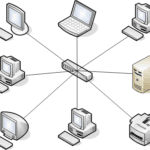
Industrial networks are many and varied. They can be distinguished from one another in a variety of ways, one of which is the topology of the network; in other words, how the devices on the network are connected together and how they exchange information and communicate with one another. There’s also a distinction between two […]
How are fast Fourier transforms used in vibration analysis?
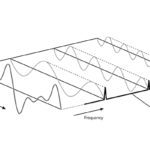
Fast Fourier transforms are mathematical calculations that transform, or convert, a time domain waveform (amplitude versus time) into a series of discrete sine waves in the frequency domain. Machine vibration is typically analyzed with measurements of the vibration frequency, displacement, velocity, and acceleration. The latter three — displacement, velocity, and acceleration — are time domain […]
How is machine vibration defined?
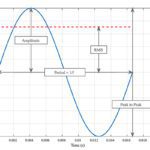
Machine vibration is a normal, and typically unavoidable, result of moving and rotating parts, often caused by standard manufacturing and assembly tolerances that lead to clearances between mating parts or imbalances in rotating parts. And while routine machine wear can cause vibration to increase over time, when a machine experiences a significant or sudden increase or […]
Is EtherCAT on the rise for motion applications?

For motion control and machine automation, the EtherCAT networking protocol has been slowly gaining acceptance, garnering more interest from both end users as well as developers of motion control systems. As one of several Ethernet-based motion protocols, it offers a number of advantages that have made it an increasingly common choice for many system designers. […]
What is a motion profile?

Servo applications require defined, controlled movements, often to move a part to a specified position at a precise velocity or along a predetermined path. A motion profile provides the physical motion information and graphically depicts how the motor should behave during the movement (often in terms of position, velocity, and acceleration) and is used by […]
What happens when a multi-turn encoder reaches 4096 turns?
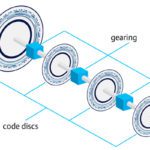
One of the first decisions when choosing a rotary encoder is whether it should provide incremental or absolute position feedback. That choice primarily depends on whether the encoder should be able to exactly detect its position upon startup. If so, then an absolute encoder is typically required. When considering an absolute encoder, the next decision […]